Download BeWise App & Catalyze Your NEET Exam Preparation
🎥Interactive Live & Recorded Lectures
📚Latest NEET Exam-Oriented Study Material
💬 Exclusive Doubt Groups with 24/7 Faculty Support
✅Structured Course Completion with Timely Revisions
👨🏫 Personalized One-on-One Mentorship
🎯 Beyond Academics: Expert Career Guidance & Counseling
Click
Is NEET 2027 Going to Be CBT Mode? Latest NTA Updates & How BeWise Classes Helps You Prepare for NEET 2027 CBT Mode
Is NEET 2027 Going to Be CBT Mode? Latest NTA Updates & How BeWise Classes Helps You Prepare for NEET 2027 CBT Mode
Is NEET 2027 going to be CBT mode following the recent integrity concerns? While the Union Education Ministry announced plans for a digital transition in May 2026, the NTA currently maintains that the shift remains under active consideration. Understanding how this potential change to a computer-based test affects your study routine is essential for staying ahead in your medical entrance journey.
Key Takeaways
The Ministry of Education announced an intent to shift to CBT mode starting from the 2027 exam cycle to prevent paper leaks.
A final decision depends on the Nandan Nilekani-led task force report, which is expected to standardize digital infrastructure.
CBT mode allows students to edit answers and navigate questions via a color-coded palette, unlike the permanent marking of OMR sheets.
No changes to the NCERT-based syllabus are expected; the transition primarily affects the medium of the examination.
The medical entrance landscape in India is currently at a crossroads. For decades, the National Eligibility cum Entrance Test (NEET-UG) has relied on the traditional pen-and-paper format. However, the recurring challenges associated with physical logistics—printing, transporting, and storing millions of booklets—have prompted a serious re-evaluation by the National Testing Agency (NTA) and the Ministry of Education.
Recent statements from government officials and submissions made to the Supreme Court indicate that a shift toward a Computer-Based Test (CBT) is no longer a distant possibility. As an aspirant targeting the NEET 2027 exam, you are likely navigating a sea of speculation. This guide provides a clear breakdown of the current official status of NEET 2027 CBT mode, the psychological transition required for digital testing, and actionable steps to build screen stamina for the new exam pattern.
Official Status: Is NEET 2027 Going to be CBT Mode?
The official stance is that the move to computer-based testing for NEET-UG 2027 is under active consideration but not yet finalized. On May 15, 2026, Union Education Minister Dharmendra Pradhan indicated the government's intent to transition the exam to a digital format to enhance security. However, as of late 2026, the NTA has not issued a formal notification confirming the change for all candidates.
A high-powered task force, chaired by Infosys co-founder Nandan Nilekani, is currently reviewing the national examination strategy. This panel is tasked with creating a blueprint for robust digital infrastructure that can handle approximately 24 lakh candidates. The government is specifically looking at utilizing AICTE-approved technical colleges to serve as secure exam centers. Until the task force submits its final report and the NTA releases the 2027 Information Bulletin, students should prepare for both possibilities while prioritizing digital literacy.
Following the integrity issues in the 2024 and 2026 cycles, the Radhakrishnan Committee recommended shifting to computer based test to eliminate the physical vulnerabilities of paper booklets. By delivering encrypted questions directly to a computer terminal, the NTA aims to reduce human intervention and localized discrepancies that have previously led to leaks.
NEET 2027 CBT Mode vs. OMR: A Comparative Analysis
Transitioning to a computer-based test changes the fundamental ergonomics of how you attempt the NEET exam. In a CBT environment, you swap the HB pencil for a mouse. This shift offers several functional advantages but also introduces new challenges like screen fatigue.
If NEET 2027 shifts to CBT, it will likely be conducted across multiple shifts to accommodate the large candidate pool. To ensure fairness, the NTA will use a normalization formula, similar to JEE Main. This adjusts scores based on the relative difficulty of different question sets, ensuring a student in a 'tough' shift is not at a disadvantage compared to one in an 'easier' shift.
Success in a digital exam requires more than just subject knowledge; it demands technical fluency and mental mapping without physical cues. When you cannot underline keywords on a screen, you must train your brain to extract vital information visually and transfer it to your scratch pad for calculations.
Attempting a 200-minute exam on a monitor can lead to eye strain and loss of focus. Practice the 20-20-20 rule during your study sessions: every 20 minutes, look at something 20 feet away for 20 seconds. Additionally, start taking at least one full-length mock test per week on a desktop or laptop to acclimatize your eyes to the backlight.
NEET 2027 Preparation Just @Rs 3499
Join BeWise Classes Alpha Batch & Learn with Top Faculty of Kota
Effective Use of the Question Palette in NEET Exam
The CBT interface typically features a color-coded palette: white for unvisited questions, red for unanswered, green for answered, and purple for 'Mark for Review'. Use the 'Mark for Review and Next' feature for questions where you are stuck between two options, allowing you to quickly return to them without searching through pages.
Get Ready for NEET 2027 CBT Mode with BeWise Classes
At BeWise Classes, we have designed our curriculum to bridge the gap between traditional study methods and the NEET-UG 2027 CBT mode. Our platform provides the exact tools required to build confidence in a CBT environment.
CBT-style mock tests that copy the real exam screen and interface.
Regular computer-based practice sessions for offline and online students.
Full digital exam simulations under timed conditions to improve speed.
Detailed performance analytics after each test to identify subject-wise gaps.
Personalized mentoring and time-management workshops to reduce screen fatigue.
A comprehensive 25,000+ question bank available in an online format.
Access to free 10-year PYQs optimized for CBT mode attempts.
Online tests for home-based students with real-time ranking.
We provide a specialized environment where offline students also get mandatory CBT Mode Test practice sessions, ensuring that rural or first-time computer users feel entirely at ease on the actual exam day.
The potential shift to NEET 2027 CBT mode is a significant step toward a more secure and transparent medical entrance system. While the NTA and the Nilekani task force finalize the infrastructure, your best strategy is early adaptation. Focus on building digital literacy, mastering the question palette, and maintaining your NCERT-based core preparation. For students looking to simulate the real exam environment, the BEAT 2027 Test Series and our online question bank provide the ideal training ground. Stay focused, stay updated with official NTA notifications, and start your digital transition today.
Want to Crack NEET 2027 with 700+ Marks?
Join Our DREAM 2027 Batch & learn with Top Faculty from Kota
The Ministry of Education has announced plans to shift NEET-UG to CBT mode starting in 2027 to prevent paper leaks. While implementation planning is underway, students should wait for the official NTA Information Bulletin for final confirmation.
Will NEET 2027 be easier or tougher in CBT mode?
The difficulty level of the questions remains governed by the NCERT syllabus and will likely remain consistent. However, the exam might feel different due to the shift from paper to screen; the introduction of multiple shifts and normalization will ensure fairness regardless of difficulty variations.
Can I change my answers in the NEET online exam?
Yes, one of the primary advantages of CBT mode is the flexibility to edit or change your answers at any point before the final submission. This eliminates the risk of 'silly mistakes' often associated with permanent bubbling on OMR sheets.
How will rough work be managed in NEET CBT 2027?
Students will be provided with physical rough sheets or scratch pads at the exam center for all calculations in Physics and Chemistry. These sheets must be submitted to the invigilator before leaving the examination hall.
What happens if the computer system fails during the exam?
NTA protocols for CBTs include real-time server backups. If a terminal fails, your timer is paused, and you will be moved to a buffer computer where you can resume the exam exactly from where you left off without losing any data.
Will there be any change in the NEET 2027 syllabus due to CBT?
No, the shift to a computer-based test only changes the mode of delivery. The academic content, weightage of subjects, and reliance on the NCERT curriculum for Physics, Chemistry, and Biology are expected to remain unchanged.
How can I practice for the NEET 2027 online mock tests?
Aspirants should use online simulators like the BeWise Classes BEAT 2027 Test Series, which mimics the NTA interface. Practicing on a computer rather than a mobile device helps in developing the necessary screen stamina and navigation speed.
Is a calculator allowed in the NEET 2027 CBT mode?
No, calculators are strictly prohibited in the NEET exam, regardless of whether it is conducted online or offline. All mathematical calculations must be performed manually on the provided rough sheets.
NEET 2027 Exam Date: When Will NEET 2027 Be Held? Registration Timeline & Impact of CBT Mode
NEET 2027 Exam Date: Expected Schedule and CBT Mode Impact
The neet 2027 exam date is expected to fall on May 2, 2027, despite ongoing discussions regarding shifts toward CBT mode. Understanding these timeline shifts is vital for maintaining a competitive edge. This guide details how NTA prioritizes the academic calendar and why preparing for 2nd May remains the safest strategy for NEET 2027 aspirants.
The expected NEET 2027 exam date is May 2, 2027, following the traditional first-Sunday-of-May month.
A shift to Computer Based Test (CBT) mode is anticipated to improve security and prevent paper leaks.
The official notification is projected for release in February 2027, with registrations starting shortly after.
Syllabus completion by February 2027 is recommended to accommodate multiple shifts and digital practice.
Recent shifts in the medical entrance landscape, particularly the ReNEET 2026 scheduling and potential move to cbt mode for NEET 2027, have left many students wondering if the neet 2027 exam date will be postponed. While it is natural to assume that disruptions in one cycle lead to delays in the next, the National Testing Agency (NTA) has a history of prioritizing the alignment of medical college sessions above all else. Relying on rumors of a June or July shift could be a costly mistake for your NEET 2027 preparation.
To build a foolproof roadmap for the NEET 2027, candidates must look beyond the headlines at the logistical constraints NTA faces. Between state board examinations in April and the Common University Entrance Test (CUET) in late May, there is a very specific window where the medical entrance test can occur. This article provides a data-driven breakdown of the upcoming NEET 2027 schedule, eligibility criteria, and the technical shifts required to master the new exam format.
NEET 2027 Exam Date: Why May 2 is the Target
The projected neet 2027 exam date is May 2, 2027. NTA aims to maintain the first Sunday of May as the standard date to ensure that first-year MBBS classes begin on time across the country. Historical data proves that even when the NEET exam cycle is significantly delayed, NTA works to pull it back to the original timeline as quickly as possible.
Exam Year
Exam Date
Observation
NEET 2022
July 17, 2022
Conducted late due to COVID recovery
NEET 2023
May 7, 2023
Successfully pulled back to May
NEET 2026 (Expected)
June 21, 2026 (RENEET)
Delayed from May 3 due to leaks
NEET 2027 (Expected)
May 2, 2027
Projected return to original schedule
Transitioning from the June 2026 ReNEET back to a May 2027 date is entirely feasible, as demonstrated by the transition between 2022 and 2023. Aspirants should therefore plan their study cycles based on a 12-month timeline rather than hoping for extra weeks.
Understanding the NEET 2027 CBT Mode Implementation
The shift to a Computer Based Test (CBT) for NEET UG 2027 is primarily a security measure intended to curb paper leaks through encrypted question paper delivery. However, this change introduces significant logistical hurdles. Currently, India lacks the infrastructure to host 2.2 million aspirants in a single digital shift, suggesting the exam may span several days.
The Scheduling Sweet Spot for NEET 2027
The neet 2027 exam date is constrained by other major national exams. JEE Main Session 2 and state boards typically occupy April, while CUET takes over testing centers from May 15 to May 31. This leaves a narrow window between May 1 and May 14 for the NTA to conduct multiple shifts of the medical entrance test. If the CBT format is adopted, candidates might see exam dates spread across this specific fortnight.
How Percentile Normalization Works in NEET 2027 CBT Mode
If the NEET 2027 exam is held across multiple shifts, NTA will likely use a percentile-based normalization process similar to JEE Main. This ensures that a student who faces a difficult question paper in one shift is not at a disadvantage compared to someone who gets an easier set in another. Ranks are determined by comparing how you performed relative to others in your specific shift, rather than using raw marks alone.
NEET UG 2027 Application Form and Registration Timeline
While the exam date is the primary concern, the process begins months earlier with the neet ug 2027 application form. The NEET UG registration window is often relatively short, and missing it can invalidate a year of preparation. Students should prepare their identity documents, category certificates, and academic records before the NEET 2027 application form window opens.
Moving from pen-and-paper OMR sheets to a digital screen requires a different tactical approach. While the neet 2027 exam pattern and syllabus remain based on NCERT, the way you interact with the questions will change significantly. You will no longer be able to circle keywords on a physical paper or flip pages rapidly.
Digital Navigation: Practice using the navigation panel to jump between Physics, Chemistry, and Biology. Use the 'Mark for Review' feature to manage time effectively, as it allows you to return to uncertain questions with a single click.
On-Screen Equations: Get comfortable reading complex chemical formulas like C6H12O6 and mathematical expressions like Δ G = Δ H - TΔ S on a screen. High-resolution mock tests on desktops are essential.
No Smudging: A major advantage of the CBT mode is the ability to change answers instantly. Unlike OMR sheets where a wrong bubble is permanent, digital selections can be corrected until the final submission timer hits zero.
For the NEET 2027 session, the NCERT rationalized syllabus remains the core authority. Aspirants should target finishing the entire syllabus by February 2027. This leaves approximately 60 days for intensive full-length mock tests and fixing weak areas in Physics and Chemistry. Consistency in Biology remains the foundation, as digital reading can sometimes lead to missing small details in long passage-based questions.
Currently, the neet 2027 eligibility criteria require candidates to have passed Class 12 with Physics, Chemistry, Biology, and English. Candidates must be at least 17 years old by December 31, 2027. While there have been ongoing policy discussions regarding reintroducing an upper age limit or limiting the number of attempts to manage the high volume of CBT applicants, no such limit has been finalized yet. However, students with multiple drops should treat the NEET 2027 exam as a critical opportunity before any restrictive policies might take effect in future years.
The NEET 2027 exam represents a significant evolution in medical entrance testing in India. With the expected neet 2027 exam date set for May 2, 2027, students must balance their focus between mastering the NCERT syllabus and adapting to the new CBT format. Avoid relying on rumors of postponement and instead focus on completing your preparation by February to allow for digital mock test sessions. For those seeking structured guidance, joining a program like the Alpha 2027 Batch can help align your study plan with the projected NTA schedule.
Want to Crack NEET 2027 with 700+ Marks?
Join Our DREAM 2027 Batch & learn with Top Faculty from Kota
NEET 2027 is expected to be conducted on May 2, 2027. NTA typically schedules the exam for the first Sunday of May to maintain the medical academic calendar, though the shift to CBT mode could result in multiple shifts across the first two weeks of the month.
Will NEET 2027 be conducted in CBT Mode?
There are strong indications from the Education Ministry that NEET UG 2027 will move to a Computer Based Test (CBT) format. This change is aimed at enhancing security through encrypted question delivery and preventing the paper leaks associated with the traditional pen-and-paper format.
What is the age limit for neet 2027?
As of now, there is no upper age limit for NEET UG 2027, though policy discussions are ongoing. The lower age limit is strictly enforced; candidates must be at least 17 years old by December 31, 2027, to be eligible for admission.
How many attempts are there for neet 2027?
Currently, there is no restriction on the number of attempts for NEET UG. However, with the transition to CBT and a massive increase in applicants, there are discussions about reintroducing attempt limits in future sessions, making the 2027 exam a vital opportunity for repeaters.
Will neet 2027 be conducted twice a year?
While there have been suggestions to conduct NEET twice a year like JEE Main, there is no official confirmation for this change for the NEET 2027 session. The current focus remains on successfully transitioning the single annual exam to a secure CBT format.
What happens if the computer crashes during the NEET 2027 CBT exam?
NTA protocols ensure that all progress is saved on the local server in real-time. If a terminal fails, you will be moved to a different computer, and your previously marked answers will remain intact, with the lost time being credited back to your exam clock.
What documents are required for NEET 2027 registration?
Candidates will typically need their Class 10 and 12 certificates, a valid government ID (like Aadhaar), scanned copies of photographs and signatures, and category certificates if applicable. It is advisable to have these documents ready by January 2027 before the neet ug 2027 application form is released.
How does the percentile normalization process work for NEET?
If the exam is held in multiple shifts, NTA uses normalization to ensure fairness. Your raw score is converted into a percentile based on your performance compared to others in your specific shift, which accounts for any variations in the difficulty level of different question sets.
Physics Chapter Wise Weightage for NEET 2027 Download PDF | Class 11 & 12 Physics Marks Distribution
Physics Chapter Wise Weightage for NEET 2027 Download PDF | Class 11 & 12 Physics Marks Distribution
Are you struggling to balance the vast Physics syllabus for your upcoming medical entrance exam i.e NEET 2027? Understanding the physics chapter wise weightage for neet 2027 is the most effective way to prioritize your study hours. By focusing on high-yield units like Modern Physics and Ray Optics, you can strategically improve your score in NEET Physics. This guide breaks down every chapter's importance to help you plan better during NEET 2027 preparation.
Modern Physics and Ray Optics are the highest weightage Physics chapters, contributing significantly to the total 180 marks.
Class 12 chapters generally carry more weight than Class 11, specifically in areas like Current Electricity and Semiconductors.
Mechanics remains a foundational unit in Class 11, with Gravitation and Kinematics being key scoring areas.
Experimental Skills in Physics now carries a specific weightage of 4%, requiring dedicated practice for NEET 2027.
Preparing for NEET Physics often feels like an uphill battle because of the mix of complex theories and intense numerical problems. Many students spend weeks mastering difficult topics that rarely appear in the NEET exam, while ignoring simpler, high-scoring chapters. To avoid this trap, you need a data-driven approach that aligns your effort with the actual NEET exam pattern.
In this comprehensive analysis, we break down the physics chapter wise weightage for neet 2027 based on official trends and expert projections. We will look at the specific number of questions expected from each chapter of Physics and how they translate into marks. Whether you are starting from scratch or refining your revision for NEET 2027, this Physics Chapter wise weightage guide will show you exactly where to focus for a 140+ score in Physics.
Physics Chapter Wise Weightage for NEET 2027: The Big Picture
The Physics section in NEET consists of 45 questions, totaling 180 marks. While every chapter in the NCERT syllabus is technically part of the exam, the distribution of questions is never equal. Some units act as the backbone of the paper, while others provide a steady stream of straightforward marks. The most important chapters for NEET physics 2027 often bridge both Class 11 and Class 12 concepts.
Here is the complete distribution of expected questions and marks for all 31 major chapters as per the BeWise Classes analysis.
Class 11 serves as the conceptual foundation for all of competitive physics. While it traditionally carries slightly less weight than Class 12, it is impossible to solve advanced electrodynamics without mastering the mechanics from Class 11. In the context of physics chapter wise weightage for neet 2027, the focus in Class 11 is heavily on Mechanics and Thermodynamics.
Chapters like Gravitation and Kinematics are essential because they offer predictable questions that are relatively easy to solve if you know the basic equations. It's often recommended to treat these as 'steady score' chapters.
Understanding the distribution of marks across the Class 11 syllabus is essential for building a strong foundation. While some chapters like Basic Mathematics and Vectors may not yield direct questions, they are fundamental to solving problems in subsequent units.
The following table provides the expected number of questions and weightage for each Class 11 Physics chapter based on recent trends for NEET 2027 preparation.
Class 11 Physics chapters shown with expected questions and weightage percentages.
Class 12 Physics Weightage for NEET
Class 12 Physics chapters are often the deciding factor in a student's final rank. These topics are not just high-weightage; they are also highly conceptual and formula-heavy. When looking for the Physics most important chapters for NEET 2027, you will find that units like Electrodynamics and Modern Physics dominate the list.
Ray Optics and Current Electricity are particularly vital, as they together account for nearly 12% of the total Physics weightage in NEET. Modern Physics is another powerhouse, where Dual Nature, Atoms, and Nuclei provide a significant number of questions that are usually more theoretical and less calculation-intensive than Mechanics.
Class 12 Physics chapter-wise expected questions and weightage distribution.
High Weightage Chapters in Physics for NEET 2027
If you are aiming for high efficiency, you should focus on the do or die chapters for NEET physics. These are the sections that give you the highest return on investment (ROI). For example, Modern Physics topics like Dual Nature and Atoms are often straightforward and follow NCERT lines closely. Master these first to secure a solid base score.
Another high-yield area is Electrodynamics. It includes Current Electricity and Moving Charges. These chapters require a bit more practice with numericals, but they are consistently tested every year. Understanding how to apply Ohm's law and Kirchhoff's laws is essential for these 5% weightage units.
How to Prepare High Weightage Physics Chapter for NEET 2027
Understanding the weightage is only half the battle; knowing the best way to study high weightage physics chapters for NEET is what makes the difference. Start by categorizing the syllabus into three tiers. Tier 1 should include high-weightage, high-priority chapters. Tier 2 contains medium-weightage topics that are important for ranking, and Tier 3 includes low-weightage sections for quick formula revision.
Don't just solve problems blindly. Analyze how topics are conceptually linked. For example, mastering Laws of Motion is critical before you attempt Rotational Motion. Similarly, understanding Electrostatics is the gateway to mastering Capacitance and Current Electricity. Use this tiered strategy to structure your weekly schedule.
The Physics-Chemistry Crossover Efficiency
One smart way to save time is to focus on crossover topics. Thermodynamics and Atomic Structure are present in both Physics and Chemistry. By mastering Δ G = Δ H - TΔ S and the Bohr model in Physics, you are simultaneously preparing for a significant portion of the Chemistry syllabus. This synergy allows you to double your efficiency in high-weightage areas.
Mastering the physics chapter wise weightage for neet 2027 is the key to a strategic and stress-free preparation. By prioritizing Modern Physics, Optics, and Electrodynamics, you can secure over 50% of your marks with focused effort. Remember that Class 12 Physics chapters carry significant weight, but Class 11 provides the foundational tools needed to solve them. Start your NEET 2027 preparation by targeting the 'Easy Kill' chapters today and gradually move toward the more complex high-yield units. For more personalized study plans and expert guidance, explore our specialized NEET courses.
NEET 2027 Preparation Just @Rs 3499
Join BeWise Classes Alpha Batch & Learn with Top Faculty of Kota
Which chapter has highest weightage in NEET physics?
Based on the expected trends for NEET 2027, the Modern Physics unit (covering Dual Nature, Atoms, and Nuclei) has the highest combined weightage at approximately 11%. Individually, Ray Optics & Optical Instruments also carries a significant 7% weightage.
Is NEET 2027 syllabus reduced for physics?
While the official NTA notification for 2027 is pending, recent trends show a focus on core NCERT topics with some deletions in older syllabi. It is best to follow the latest NCERT guidelines and focus on Experimental Skills, which now carries 4% weightage.
How many questions come from mechanics in NEET physics?
Mechanics, including Kinematics, NLM, Work-Power, and Rotational Motion, typically accounts for 8 to 10 questions. This makes it one of the largest units in Class 11, contributing nearly 20% to the total Physics marks.
Is NCERT enough for NEET physics 2027 weightage topics?
NCERT is absolutely essential for conceptual clarity and theoretical questions, especially in Modern Physics and Semiconductors. However, for high-weightage numerical topics like Mechanics and Electrodynamics, practicing extra problems from a dedicated question bank is recommended.
What is the weightage of Class 11 vs Class 12 in NEET physics?
Class 12 Physics usually carries slightly more weight, often accounting for 55% to 60% of the questions. High-yield Class 12 topics like Current Electricity and Optics are crucial for reaching a score of 140 plus.
What are the easy kill chapters for NEET physics 2027?
The easiest scoring chapters are Units and Measurements, Semiconductor Electronics, and Electromagnetic Waves. These chapters are mostly formula-based or theoretical and contribute about 6-8 questions in total.
Where to find official NTA physics weightage for NEET 2027?
NTA does not release an official chapter-wise weightage document. Aspirants must rely on historical data and expert analysis, such as the BeWise Classes weightage table, which tracks question frequency over several years.
Is thermodynamics important for NEET 2027 physics?
Yes, Thermodynamics is very important because it carries a 2% weightage in Physics and also appears in the Chemistry syllabus. Mastering it once helps you score in two different sections of the NEET exam.
Download Chemistry Chapter Wise Weightage for NEET 2027 PDF | Get List of Most Important Chemistry Chapters
Download Chemistry Chapter Wise Weightage for NEET 2027 PDF | Get List of Most Important Chemistry Chapters
Are you struggling to decide which Chemistry chapters deserve your maximum study hours and can help you to score more in NEET? Understanding the chemistry chapter wise weightage for neet 2027 is the most efficient way to prioritize your preparation and maximize your score. This guide breaks down exactly how many questions to expect from Physical, Organic, and Inorganic sections, helping you build a targeted strategy for the 180 marks in NEET Chemistry.
Organic Chemistry remains the highest weightage section with approximately 16-18 questions expected.
Coordination Compounds and Chemical Bonding are the highest-yield inorganic chapters.
Physical Chemistry weightage for NEET is roughly 35%, focusing heavily on Electrochemistry and Thermodynamics.
Class 12 syllabus contributes slightly more to the overall question count than Class 11 in NEET Exam.
Acing the NEET exam requires a calculated approach to the vast syllabus rather than just brute-force studying. Chemistry often acts as the primary rank-booster because it balances the logical problem-solving of Physics with the factual recall required in Biology. By analyzing the chemistry chapter wise weightage for neet 2027, you can pinpoint exactly which units offer the highest return on your study hours.
Recent paper trends from 2022 to 2026 indicate that the NTA is focusing heavily on NCERT-based questions. This shift means your success depends on understanding the Chemistry question distribution, particularly in high-yield areas like Organic and Inorganic Chemistry. We have meticulously compiled this data to help you navigate the 180-mark Chemistry question distribution with precision and confidence.
Whether you are a Class 11 student building your foundation or a Class 12 student in the final stages of revision, this blueprint provides the exact weightage you need. We will now break down the specific Chemistry chapters and their expected question counts to reveal where the most scoring opportunities are hidden.
Sectional Distribution: Physical, Organic, and Inorganic Weightage in NEET
Before looking at individual chapters, it is helpful to see how the NTA balances the three main pillars of Chemistry. Each section requires a different cognitive skill set: calculation for Physical, logic for Organic, and retention for Inorganic.
Chemistry Section
Expected Questions
Marks Allocation
Weightage (%)
Organic Chemistry
16-18
64-72
35%
Inorganic Chemistry
14-15
56-60
30%
Physical Chemistry
15-16
60-64
35%
Chemistry section weightage compares questions, marks allocation, and cognitive skills.
Physical Chemistry Chapter Wise Weightage for NEET 2027
Physical Chemistry is often where NEET aspirants struggle the most due to the heavy reliance on numerical problem-solving and conceptual application. However, once you develop a strong grip on the underlying formulas, these chapters become the most scoring part of the Chemistry paper. The physical chemistry weightage for NEET highlights that chapters involving multi-step calculations, such as Electrochemistry and Equilibrium, carry significant importance.
Understanding the distribution of questions helps you decide how much time to allocate to numerical practice versus theory. Below is the detailed marks distribution for all Physical Chemistry chapters, with Chemical and Ionic Equilibrium listed separately to help you plan your preparation better:
To excel here, you must prioritize the Mole concept as it forms the foundation for all other chapters. Focus on the Nernst equation in Electrochemistry, pH calculations in Ionic Equilibrium, and the application of Le Chatelier's principle in Chemical Equilibrium. Consistent practice with SI units and logarithmic calculations is what separates toppers from average scorers.
Physical Chemistry chapter-wise questions, marks, and weightage distribution.
Inorganic Chemistry Chapter Wise Weightage for NEET 2027
Inorganic Chemistry is often perceived as a memory-heavy subject, but it actually follows a logical framework of periodic trends and structural bonding. The inorganic chemistry chapter wise marks distribution highlights that high-yield topics like Coordination Compounds and Chemical Bonding form the backbone of the entire paper.
Understanding these trends allows you to predict reactions rather than just memorizing them. Below is the detailed weightage for all Inorganic Chemistry chapters based on recent NEET trends:
Why Focus on Chemical Bonding and Coordination Compounds?
You might wonder, why is chemical bonding important for NEET exam? It is essentially the foundation for every other chapter. Without a clear understanding of VSEPR theory, hybridization, or molecular orbital theory, you will struggle to grasp the geometry and reactivity of molecules in both Organic and Inorganic sections.
Coordination Compounds is equally critical because it is a highly structured chapter. Questions are usually predictable, focusing on IUPAC nomenclature, Crystal Field Theory (CFT), and Isomerism. Mastering these two chapters alone can secure nearly 28 marks, giving you a significant edge in your overall Chemistry score in NEET 2027.
NEET 2027 Preparation Just @Rs 3499
Join BeWise Classes Alpha Batch & Learn with Top Faculty of Kota
Inorganic Chemistry chapter-wise marks distribution and expected questions.
Organic Chemistry Chapter Wise Weightage for NEET 2027
Organic Chemistry is often the most feared section, but it is actually the most logical part of the syllabus. Instead of trying to memorize thousands of isolated reactions, your focus should be on building a conceptual flow. The organic chemistry weightage for NEET 2027 emphasizes GOC and Reaction Mechanisms as the foundational pillars of the subject.
If you master the electronic effects in GOC-I and the mechanisms in GOC-II, you can efficiently tackle complex multi-step conversions. Use the table below to prioritize chapters based on the latest exam trends and their marks distribution.
Chapter Name
Expected Questions
Marks
Weightage (%)
IUPAC Nomenclature
1
4
2%
Isomerism
0
0
0%
GOC - I (General Organic Chemistry - I)
2
8
4%
GOC - II (General Organic Chemistry - II)
2
8
6%
Hydrocarbons
2
8
4%
Halogen Derivatives
1
4
2%
Alcohols, Phenols & Ethers
1
4
3%
Carbonyl Compounds & Carboxylic Acids
2
8
5%
Amines
2
8
4%
Biomolecules
1
4
2%
Practical Organic Chemistry
2
8
6%
A common doubt among aspirants is whether organic chemistry is more important than inorganic for NEET. While the total question count is often similar, Organic Chemistry requires a much higher level of conceptual synthesis. A single advanced question might combine acidic strength comparison from GOC with a specific test from Practical Organic Chemistry. Mastery over these high-yield topics is non-negotiable if you are aiming to score above 160 in the Chemistry section.
Most Important Chapters for NEET Chemistry: The Do-or-Die List
If you are working against a tight schedule, you cannot afford to treat every topic with the same level of depth. To optimize your score, you must prioritize your study plan based on the latest NTA exam patterns and the chemistry chapter wise weightage for neet 2027. Identifying each Chemistry High Weightage Chapter early in your preparation allows you to channel your energy toward the topics where the most marks are concentrated.
High-Yield Chemistry Chapters
The following list represents the Chemistry Most Important Chapter selection for any serious aspirant. These topics form the core of the NEET paper and should be mastered during your initial preparation and first major revision cycle.
Chapter Name
Expected Questions
Key Focus Areas
Coordination Compounds
3-4
Werner’s theory, VBT, and Crystal Field Theory.
Chemical Bonding
3
VSEPR theory, Hybridization, and Molecular Orbital Theory.
GOC (I & II)
4
Inductive effect, Resonance, and Stability of Intermediates.
Hydrocarbons
3
Alkanes, Alkenes, and Alkynes; focus on named reactions.
Carbonyl Compounds
3
Aldehydes and Ketones; Nucleophilic addition reactions.
Electrochemistry
2-3
Nernst equation, Kohlrausch's law, and Faraday's laws.
Thermodynamics
2-3
First and second laws, Enthalpy, and Gibbs Free Energy.
Class 11 Chemistry High Weightage Chapters
Securing a high rank requires a strong grasp of Chemistry High Weightage Chapters from the Class 11 syllabus, as they lay the groundwork for advanced concepts. Mastering these topics ensures you do not struggle when transitioning to complex Class 12 modules.
For instance, Equilibrium is critical for building numerical proficiency, with an expectation of at least 3 questions in the exam. It is important to remember that ionic equilibrium is often more challenging than chemical equilibrium, so allocate your study hours accordingly. While Thermodynamics and Hydrocarbons are Class 11 subjects, their concepts are frequently integrated with Class 12 reactions, making them essential for a top score.
Strategic Preparation: How to Score 160 Plus in NEET Chemistry 2027
Knowing the weightage is only half the battle. The real challenge is knowing how to prepare for NEET 2027 chemistry chapter wise so that you actually retain the information during the three-hour exam window.
Step 1: NCERT Dominance
For Inorganic and Organic sections, NCERT is your bible. Many questions are picked directly from the tables and "Note" boxes in the textbook. Do not jump to reference books until you have read NCERT at least three times.
Step 2: Formula and Reaction Mapping
Create a formula sheet for Physical Chemistry. For Organic, build a "Reaction Map" where you connect reagents to products. This helps you visualize how one functional group converts to another, which is crucial for solving multi-step conversion questions.
Step 3: Solve Previous Year Questions (PYQs)
Analyze the trends from 2017 to 2026. You will notice that while the specific questions change, the concepts (like the acidic strength of phenols or the hybridization of Xe compounds) are repeated almost every year. Attempt 10 Years NEET PYQs Paper in CBT Mode | 100% FREE
Mastering the chemistry chapter wise weightage for neet 2027 is the fastest way to turn a mediocre score into a medical seat. By focusing on Coordination Compounds, GOC, and Electrochemistry, you secure a massive portion of the marks with targeted effort. Start your preparation today by downloading the NTA NEET chemistry chapter wise weightage PDF and mapping out your study schedule. For more resources, check our Download NEET 2027 Syllabus PDF to ensure you are aligned with the latest updates.
NEET 2027 Preparation Just @Rs 3499
Join BeWise Classes Alpha Batch & Learn with Top Faculty of Kota
Which chapter has the highest weightage in NEET chemistry?
Coordination Compounds and General Organic Chemistry (GOC) typically have the highest weightage, often yielding 4 questions each. Following these, Chemical Bonding and Electrochemistry are also high-yield chapters that students must prioritize.
Is the NEET 2027 syllabus changed?
As of the latest updates for 2026-2027, the syllabus remains aligned with the rationalized NCERT curriculum. However, the NTA often releases final syllabus notifications a few months before the exam, so students should focus on the current NCERT chapters.
How many questions are asked from equilibrium in NEET?
In recent years, the Equilibrium chapter (including both Chemical and Ionic) has contributed approximately 3 questions to the NEET chemistry paper. It is a significant chapter that requires a strong grasp of both concepts and numerical applications.
Is NCERT enough for NEET chemistry 2027?
NCERT is sufficient for about 90-95% of the exam, especially for Inorganic and Organic sections. For Physical Chemistry, while the concepts are from NCERT, you will need extra practice from standard problem-solving books to handle numerical complexity.
What is the weightage of Class 11 and 12 chemistry in NEET?
Class 12 chemistry usually carries a slightly higher weightage, approximately 52-55%, compared to Class 11, which carries 45-48%. However, Class 11 chapters like Bonding and GOC are essential to understanding the Class 12 syllabus.
Can I skip p-block elements for NEET 2027?
Skipping p-block is not recommended as it consistently yields at least 2 questions. Since it is largely memory-based and questions often come directly from NCERT lines, it provides an easy opportunity to score marks quickly.
Which part of chemistry is toughest in NEET?
Most students find Physical Chemistry the toughest due to the calculation-heavy nature of chapters like Thermodynamics and Ionic Equilibrium. Organic Chemistry can also be challenging if the fundamentals of General Organic Chemistry (GOC) are not clear.
What are the Do or Die chapters for NEET chemistry?
The 'Do or Die' chapters include Coordination Compounds, Chemical Bonding, GOC, Hydrocarbons, and Electrochemistry. Mastering these five topics alone can help you secure a significant portion of the total 180 marks.
NEET Biology Chapter Wise Weightage Download PDF: Get Biology high-weightage chapters List
Do you feel overwhelmed trying to memorize every detail of the massive NEET Biology syllabus? Accessing a neet biology chapter wise weightage pdf allows you to stop guessing and start focusing on high-yield topics like Genetics and Human Physiology. By understanding the nta neet 2027 biology weightage pdf, you can strategically plan your revision to secure those critical 360 marks.
Biology accounts for 50% weightage of the NEET exam, making it the most critical subject for rank improvement.
Genetics and Evolution is the highest-weightage chapter in NEET Biology Syllabus, contributing nearly 24% of the Biology marks.
Human Physiology and Diversity in the Living World are foundational units that students must master first.
The recent NTA syllabus reduction has shifted the importance of certain chapters, making updated chapter wise weightage data essential for NEET 2027.
Scoring high in the National Eligibility cum Entrance Test requires more than just hard work; it demands a data-driven strategy. Biology is often called the 'score booster subject' because it constitutes 50% of the entire paper. If you can master the right chapters, you are well on your way to crossing the 300-mark barrier in this subject alone. Using a neet biology chapter wise weightage pdf helps you identify where the National Testing Agency (NTA) consistently pulls questions from year after year.
In this guide, we break down the latest trends for the NEET 2027 exam, focusing on both Botany and Zoology. We have analyzed previous year NEET papers and the most recent NTA sample papers to give you a clear roadmap. Whether you are a first-time aspirant or a dropper, knowing which chapters to prioritize and which ones to skim can save you hundreds of hours of unproductive study time.
Importance of Biology Chapter wise Weightage in NEET 2027
Understanding the weightage isn't about skipping the syllabus; it's about resource allocation. Biology serves as the backbone of your score, contributing 360 marks. According to recent trends, the neet 2027 biology weightage by nta consistently favors specific units. For instance, the 'Genetics & Evolution' and 'Human Physiology' units together can account for nearly 25-30% of the entire section.
By focusing on these powerhouse units first, you ensure that even if you run out of time later, you have already secured the most scoring parts of the exam. This data-driven approach is what separates top rankers from the rest of the crowd. Relying on a neet biology syllabus with weightage allows you to visualize your progress in terms of marks rather than just chapters finished.
Resource allocation highlights Biology’s 360 marks and two powerhouse units.
Biology Unit-Wise Weightage & Marks Distribution Overview
Before looking at individual chapters, it's helpful to see the big picture. Certain units carry more weight because they contain complex conceptual frameworks that NTA uses to test your analytical skills.
Biology Unit
Approx. Weightage (%)
Genetics and Evolution
24%
Human Physiology
20%
Plant Physiology
12%
Ecology
10%
Biotechnology
10%
Biology unit weightage distribution for NEET preparation.
Class 11 Biology Chapter Weightage in NEET
Class 11 Biology provides the fundamental framework for your NEET preparation. These chapters range from the intricacies of cellular mechanisms to the vast classification of the living world, demanding a balance of conceptual understanding and factual memorization. Prioritizing high-yield units like Human Physiology and Cell Biology is vital, but understanding the weightage of each chapter helps you allocate your study time more effectively.
The table below outlines the Class 11 Biology chapter-wise weightage and the average number of questions expected based on recent NEET exam trends.
Chapter Name
Number of Questions
Weightage (%)
The Living World
1
1%
Biological Classification
3
3%
Plant Kingdom
3
3%
Animal Kingdom
4
4%
Morphology of Flowering Plants
3
4%
Anatomy of Flowering Plants
1
1%
Structural Organisation in Animals
2
2%
Cell: The Unit of Life
4
5%
Biomolecules
2
2%
Cell Cycle & Cell Division
3
3%
Photosynthesis in Higher Plants
2
2%
Respiration in Plants
1
1%
Plants Growth & Development
2
2%
Breathing & Exchange of Gases
2
2%
Body Fluids & Circulation
3
3%
Excretory Products & their Elimination
3
3%
Locomotion & Movement
3
3%
Neural Control & Coordination
2
2%
Chemical Coordination & Integration
4
4%
Class 11 Biology chapter-wise questions and weightage for NEET preparation.
Animal Kingdom Weightage in NEET 2027
Animal Kingdom is a significant hurdle for many because it requires extensive memorization of examples. However, with a 5% weightage and about 4 questions appearing every year, it is a high-reward chapter. You should create a comparative chart for different phyla to make the memorization process faster.
Class 12 Biology chapters are generally more conceptual and form a significant portion of the medical entrance exam. High-weightage units like Genetics, Biotechnology, and Ecology carry substantial weight and require deep understanding. Mastering these topics is essential for securing a high rank. In fact, 'Molecular Basis of Inheritance' is often cited as the single most important chapter in the entire syllabus due to the complexity and volume of questions it generates.
The following table outlines the expected Class 12 Biology chapter-wise weightage & Question distribution based on recent trends in NEET exam:
Chapter Name
Expected Questions
Weightage (%)
Sexual Reproduction in Flowering Plants
4
4.5%
Human Reproduction
4
4.5%
Reproductive Health
3
3.5%
Principles of Inheritance & Variation
4
4.5%
Molecular Basis of Inheritance
6
7.0%
Evolution
3
3.5%
Human Health & Disease
4
4.5%
Microbes in Human Welfare
2
2.5%
Biotechnology: Principles & Processes
3
3.5%
Biotechnology & its Applications
4
4.5%
Organisms & Populations
2
2.5%
Ecosystem
1
1.0%
Biodiversity & Conservation
2
2.5%
Want to Crack NEET 2027 with 700+ Marks?
Join Our DREAM 2027 Batch & learn with Top Faculty from Kota
Class 12 Biology chapter-wise expected NEET weightage and question distribution.
Biotechnology Weightage in NEET 2027
In the last few years, the number of questions from Biotechnology has seen a sharp upward trend. While the two chapters combined officially have a 7% weightage, they often appear in a higher density because they are interconnected with other topics like Genetics and Human Health.
Botany often involves understanding intricate mechanisms like photosynthesis, respiration, and genetics at a cellular level. It covers chapters from both Class 11 and 12 that focus strictly on the plant kingdom and related biological processes.
Many students find Plant Physiology dry, but skipping it is a mistake. It holds about 12% weightage. If you struggle with it, start with 'Photosynthesis' and 'Respiration' as they are the most scoring. The key is to understand the chemical cycles rather than just rote learning the enzymes.
Zoology is where many students score their easiest marks, particularly in Human Physiology and Reproduction. These chapters are intuitive because they relate to the human body. However, the Animal Kingdom remains a challenging chapter due to its vast variety.
Zoology Priority Chapters
Focus Areas
Questions (Avg)
Human Reproduction
Gametogenesis, Embryonic development
4
Biotechnology Principles
PCR, Recombinant DNA techniques
4
Body Fluids and Circulation
Cardiac cycle, ECG, Blood groups
3
Animal Kingdom
Chordates, Non-chordate features
4
BEAT 2027 - NCERT based Test Series for NEET 2027
Get 20 Mock Tests with detailed Video Solution Just @Rs 35/- Test
Genetics is the king of Zoology and Botany combined. On average, you can expect 10-12 questions from this unit alone (Principles of Inheritance + Molecular Basis). This means mastering Genetics is non-negotiable if you want a seat in a top government medical college.
Do or Die Chapters for NEET Biology: The Prioritization Matrix
To maximize your score, you must prioritize chapters that offer the best return on your effort. Focusing on these high-yield topics ensures that you cover the most important chapters for NEET Biology—the ones that appear year after year and carry the maximum marks.
The following table breaks down the "Do or Die" chapters based on their weightage and conceptual complexity:
Category
High-Yield Chapters
Why They Are Crucial
Genetics & Evolution
Molecular Basis of Inheritance, Principles of Inheritance
Highest weightage in the syllabus; blends concepts with logic.
Human Physiology
All 7 Chapters (e.g., Nervous System, Circulation)
A massive chunk of the paper; intuitive but requires detailed memory.
Biotechnology
Principles and Processes, Applications
High weightage relative to the length of the chapters; very scoring.
Ecology
Organisms and Populations, Ecosystem, Biodiversity
Fact-heavy and easy to understand; provides a high score for less effort.
Plant Physiology
Photosynthesis, Respiration, Growth
Concept-intensive; essential for clearing the 340+ mark barrier.
Chapters like 'The Living World' or 'Structural Organisation in Animals' generally have lower weightage. While every mark counts, you should only dedicate significant time to them after you have thoroughly mastered the high-priority units listed above.
Don't just read the NCERT like a novel. For high-weightage chapters, use active recall. After finishing a topic like 'DNA Replication', close the book and try to draw the replication fork with all enzymes. Solve at least 100 MCQs for each high-yield chapter to understand the various ways NTA can twist a simple NCERT line.
Mastering NEET Biology is a marathon that requires both speed and strategy. By downloading the neet biology chapter wise weightage pdf and focusing on the do or die chapters for neet biology, you can streamline your preparation. Remember that while weightage data is a guide, NCERT is your bible. Use this distribution to prioritize your revision cycles, ensuring that you hit the high-mark units multiple times before the exam day. For more updates on NCERT changes and latest study materials, stay connected with our expert team.
NEET 2027 Preparation Just @Rs 3499
Join BeWise Classes Alpha Batch & Learn with Top Faculty of Kota
Which chapter has the highest weightage in NEET Biology?
Molecular Basis of Inheritance consistently holds the highest weightage, often contributing 6-7 questions (approx. 7%) to the exam. When combined with Principles of Inheritance and Variation, the Genetics unit becomes the most important section of the entire paper.
Is NCERT enough for NEET Biology to score 340+?
Yes, approximately 95-98% of questions in NEET Biology are directly or indirectly based on NCERT textbooks. However, to score 340+, you must read between the lines, understand the diagrams thoroughly, and practice applying NCERT concepts to complex, statement-based questions.
What is the weightage of human physiology in NEET?
Human Physiology is one of the largest units, carrying roughly 20% weightage. It typically accounts for 12-15 questions per year, covering chapters from digestion and breathing to chemical coordination and neural control.
Can I skip low weightage chapters in NEET biology?
It is not recommended to skip any chapter entirely because every mark counts in a competitive exam like NEET. Instead, use the weightage data to prioritize. Study high-weightage chapters first for deep understanding and leave low-weightage chapters for quick revision later.
How to prioritize biology chapters for NEET 2027?
The best way is to follow a 'High Weightage, High ROI' strategy. Start with the Genetics unit, followed by Human Physiology and Biotechnology. Once these are secured, move to Ecology and Plant Physiology, as these provide a significant chunk of marks for a moderate study effort.
Where can I find official NTA NEET biology weightage?
While NTA does not release an official 'fixed' weightage document, educational experts calculate the distribution based on previous year trends and NTA sample papers. You can download the latest analyzed NEET biology unit wise weightage PDF from reputable coaching portals.
How many questions are asked from Ecology in NEET?
Ecology is a very scoring unit, typically contributing 10-12 questions. The weightage is approximately 10-12%, and because the concepts are relatively easier to grasp, it is considered a 'rank-boosting' unit for many students.
How has chapter weightage changed after the recent NEET syllabus reduction?
With the removal of certain chapters like Mineral Nutrition and Digestion, the remaining chapters—specifically in Plant Physiology and Human Physiology—have seen a slight increase in question density. It is vital to use the most recent 2027 weightage data to reflect these shifts.
NEET-UG 2027 May Go Online: Education Ministry Plans Nationwide CBT Infrastructure | NEET 2027 Latest News
NEET-UG 2027 May Go Online: Education Ministry Plans Nationwide CBT Infrastructure | NEET 2027 Latest News
With the Education Ministry recently planning a national CBT infrastructure, the NTA NEET CBT transition is now under active consideration to prevent paper leaks. Are you wondering if the neet ug 2027 cbt mode will replace the traditional pen-and-paper format? We will break down exactly how this proposed digital shift affects your NEET 2027 preparation and what changes you should expect during the exam.
Key Takeaways
The Ministry of Education is developing a nationwide Computer-Based Testing infrastructure strategy.
A final decision on NEET UG 2027 CBT mode awaits the Nandan Nilekani-led task force report.
CBT offers benefits like easy question navigation and reduced risk of paper leaks.
Aspirants should start practicing with online mock tests to adapt to the digital interface early.
The landscape of medical entrance exams in India is on the verge of a massive transformation. For years, NEET UG has been synonymous with OMR sheets and HB pencils, but recent developments suggest a departure from this tradition. The Ministry of Education is currently formulating a national examination-grade strategy to bridge the geographic gap in test-center availability and standardize specifications for online exams.
While the shift to neet ug 2027 cbt mode is not yet set in stone, it is a priority for the government following the integrity issues faced in previous cycles. The NTA already conducts JEE-Main and CUET in a digital format, making the transition for NEET a logical next step. As an aspirant, understanding this potential shift is not about panic, but about proactive adaptation. This guide explores what the move to a computer based test for NEET UG means for your daily study routine and exam-day strategy.
Why NTA is Considering the NEET UG 2027 CBT Mode
The Ministry of Education is currently developing a comprehensive nationwide CBT infrastructure strategy to facilitate this transition. Officials have indicated that the primary driver behind the NTA NEET CBT shift is the need for a leak-proof examination system. Traditional pen-and-paper exams involve complex physical logistics—printing, transporting, and storing millions of question papers—which creates multiple points of vulnerability. A digital framework allows for encrypted, real-time delivery of questions directly to the computer terminal, significantly reducing the risk of paper leaks.
Recent reports suggest that the NTA is seeking technical assistance from the AICTE to utilize the existing infrastructure of technical colleges across India as secure exam centers. This government-led initiative focuses on building a robust network that ensures equity for students in rural areas and low-connectivity districts. The goal is to standardize the testing environment so that a student in a remote village receives the exact same exam experience and security as a candidate in a metropolitan city.
To understand how the logistics compare, here is a breakdown of the two modes:
Feature
Pen-and-Paper (Current)
Computer-Based Test (Proposed)
Question Delivery
Physical transport of sealed boxes
Encrypted digital transmission
Data Security
High risk of physical intercept
End-to-end encryption protocols
Evaluation Time
Manual OMR scanning (Weeks)
Instant digital processing (Days)
Infrastructure
Schools and public buildings
AICTE-approved technical colleges
Error Margin
Risk of wrong OMR bubbling
Ability to change/edit answers
The Role of the High-Powered Task Force
A task force led by Infosys co-founder Nandan Nilekani is currently reviewing the public examination system. Their recommendations, expected soon, will provide the design and sequencing for the NEET UG digital transformation. The Ministry has indicated that while the neet ug 2027 cbt mode is under 'active consideration,' the final blueprint depends on this expert report.
NEET CBT vs. OMR: Understanding the Key Differences
Transitioning from bubbling an OMR sheet to clicking a mouse button changes the ergonomics of test-taking. In the current format, you might spend 5 to 10 minutes just filling circles. In a CBT environment, that time is redirected toward solving problems. However, you must get used to reading long Biology passages or complex Physics diagrams on a screen rather than on paper.
Feature
OMR (Pen-and-Paper)
CBT (Online Mode)
Marking Answers
Permanent (cannot be changed)
Flexible (can edit until submission)
Reviewing Questions
Manual flipping of pages
One-click navigation with color codes
Risk of Errors
High (wrong bubble sequence)
Low (direct click on question)
Rough Work
Done on the question paper
Provided via physical scratch pads
Want to Crack NEET 2027 with 700+ Marks?
Join Our DREAM 2027 Batch & learn with Top Faculty from Kota
How to Prepare for NEET UG 2027 Computer Based Test
Preparing for the neet ug 2027 cbt mode requires a shift in how you attempt mock exams. It’s no longer just about the syllabus; it's about your comfort with the digital interface. You need to develop 'screen stamina' to stay focused for over three hours without physical paper to interact with.
Start by using the best online mock tests for NEET 2027 CBT that mimic the NTA interface. These platforms usually have a timer, a question palette showing answered/unanswered status, and a 'mark for review' feature. Practice solving Physics problems while looking at the screen and writing on a side notepad. This simulates the actual exam environment where you cannot underline keywords in the question directly.
In a CBT, the question palette is your best friend. It uses colors to show you which questions you've visited, which are answered, and which are marked for review. Learning to use the 'Mark for Review and Next' button effectively can save you minutes during the final rush, as you won't have to flip through pages to find that one tricky Chemistry numerical.
While there are many benefits of CBT mode for NEET UG 2027, the transition isn't without hurdles. The sheer scale of NEET, with nearly 25 lakh candidates, makes it the largest exam to move online. Ensuring that technical glitches, power outages, or server failures don't disrupt the exam is a massive logistical challenge for the NTA.
Another concern is the digital divide. Students from affluent backgrounds often have easier access to computers for practice, whereas those in rural sectors might be using a mouse for the first time at the exam center. To address this, the government is looking at a 'multi-model sourcing architecture' to increase the number of standardized test centers in every district.
The shift toward neet ug 2027 cbt mode represents a significant step in modernizing India's medical entrance process. While the NTA and Education Ministry work on the nationwide infrastructure, your job is to remain adaptable. Focus on building digital literacy alongside your core subjects. If you start integrating online practice now, the transition from paper to screen will feel like a natural progression rather than a hurdle. Stay updated with official NTA notifications for the final confirmation on the exam mode.
NEET 2027 Preparation Just @Rs 3499
Join BeWise Classes Alpha Batch & Learn with Top Faculty of Kota
Will NEET 2027 definitely be conducted in CBT mode?
While the Ministry of Education is actively planning the infrastructure for the neet ug 2027 cbt mode, a final confirmation is still pending. The decision will be formalized once the Nandan Nilekani-led task force submits its final report on exam reforms.
Will the NEET 2027 syllabus change with CBT mode?
There is currently no official indication that the will NEET 2027 syllabus change with CBT mode. The transition generally affects the medium of the exam (online vs. offline) rather than the academic content or the subjects covered.
What is the difference between OMR and CBT mode in NEET?
The main difference between OMR and CBT mode in NEET is how you record answers. In OMR, you darken circles on paper with a pen, whereas in CBT, you select options on a computer screen. CBT allows you to change your answers easily, which is impossible on an OMR sheet.
How can I practice for the NEET online exam effectively?
To prepare, you should use the best online mock tests for NEET 2027 CBT. We recommend enrolling in the BEAT 2027 Test Series by BeWise Classes, which offers 20 comprehensive tests with video solutions. Practice solving questions on a screen while doing calculations on a separate sheet of paper to build the necessary coordination for the actual test day.
Will there be negative marking in NEET 2027 CBT?
The marking scheme, including negative marking, is expected to remain the same as the current format unless the NTA announces specific NEET 2027 exam pattern changes. Usually, the shift to online mode does not alter the scoring logic.
What happens if there is a technical glitch during the online exam?
NTA guidelines for NEET 2027 online exam will include protocols for technical issues. Typically, in CBTs, your progress is saved on the server in real-time, and if a terminal fails, you are moved to a buffer computer where you can resume from where you left off.
Will students get a rough sheet for calculations in the CBT mode?
Yes, even in a computer based test for NEET UG, students are provided with physical rough sheets or scratch pads at the exam center for solving Physics and Chemistry problems. You must return these sheets before leaving the hall.
Does NEET 2027 require advanced computer proficiency?
No, you only need basic familiarity with using a mouse to click on options and navigate through the question palette. The interface is designed to be user-friendly so that students from all backgrounds can operate it easily.
NEET 2027 Chapter Wise Weightage: High Weightage Chapters for Physics, Chemistry & Biology
NEET 2027 Chapter Wise Weightage: Subject-Wise Important Topics
Do you feel overwhelmed by the 97 chapters in your NEET 2027 syllabus? Analyzing the neet 2027 chapter wise weightage is the only way to focus your energy on the topics that actually matter. Instead of treating every chapter equally, you can prioritize high-yield chapters in NEET syllabus to maximize your 720-mark potential. This guide breaks down exactly which subjects & chapter deserve your focus.
Biology accounts for 50% weightage of the total marks in NEET, making it the most critical subject for a high score.
Genetics and Human Physiology are the highest-weightage units in Biology, totaling over 15% each.
Physics high weightage chapters include Electrodynamics and Optics, which cover nearly 30% of the subject.
Physical and Organic Chemistry contribute equally, with Chemical Bonding and Organic Principles as core pillars.
Stepping into the medical entrance journey requires more than just hard work; it demands a tactical approach to the massive NEET 2027 Syllabus. With the competitive nature of the exam, many students find themselves lost in low-yield chapters while neglecting the high weightage chapters for NEET. By understanding the neet 2027 chapter wise weightage, you can build a study schedule that mirrors the actual question distribution of the exam.
Success in NEET depends on your ability to prioritize topics that consistently appear in the question paper year after year. Whether you are starting your journey in Class 11 or are a dropper aiming for a top medical college, knowing where the 180 questions come from is the first step toward an efficient preparation strategy. This breakdown uses historical trends and current patterns to show you exactly which high weightage chapters for NEET 2027 are non-negotiable for your study plan.
NEET 2027 Exam Pattern and Marking Scheme
Before diving into individual chapters weightage, you need to understand the structural foundation of the exam. The neet ug 2027 preparation plan starts with the marking scheme. Each correct answer earns you 4 marks, while an incorrect response results in a 1-mark deduction. The 720 marks are divided as follows:
Subject
Questions
Maximum Marks
Biology (Botany + Zoology)
90
360
Physics
45
180
Chemistry
45
180
Subject-wise distribution of questions and maximum marks in the 720-mark exam.
NEET 2027 Biology Weightage by NTA
Biology is often called the 'rank maker' because it constitutes 50% of the entire paper. The neet 2027 biology weightage by nta consistently favors Genetics and Human Physiology. These two units alone provide a massive chunk of your total marks. If you master these, you are well on your way to crossing the 300-mark barrier in Biology alone.
Click Here to know Biology Chapter Weightage for NEET 2027
Class 11 Biology Chapter Weightage in NEET
In Class 11, the NEET syllabus covers foundational concepts across five major units. Focusing on high-yield areas like Human Physiology and Diversity in the Living World is essential for scoring well. The table below provides a detailed breakdown of the chapter-wise question distribution and weightage based on recent NEET exam trends.
Class 11 Biology chapter-wise question distribution and weightage.
Class 12 Biology Chapter Weightage in NEET 2027
Class 12 Biology chapters form a significant portion of the exam, with high weightage units like Genetics, Biotechnology, and Ecology carrying substantial weight. Mastering these topics is essential for securing a high rank.
Chapter Name
Questions
Weightage (%)
Sexual Reproduction in Flowering Plants
4
5%
Human Reproduction
4
5%
Reproductive Health
2
2%
Principles of Inheritance and Variation
5
6%
Molecular Basis of Inheritance
6
7%
Evolution
2
2%
Human Health and Disease
3
4%
Microbes in Human Welfare
4
4%
Biotechnology: Principles and Processes
4
4%
Biotechnology and its Applications
2
3%
Organisms and Populations
2
2%
Ecosystem
2
2%
Biodiversity and Conservation
2
2%
NEET 2027 Preparation Just @Rs 3499
Join BeWise Classes Alpha Batch & Learn with Top Faculty of Kota
Class 12 Biology chapter-wise weightage and questions for NEET 2027 preparation.
NEET 2027 Physics Chapter Wise Weightage
Physics is often the deciding factor for top medical college seats. While many students struggle with it, the neet 2027 physics chapter wise weightage reveals that focusing on Class 12 Electrodynamics can yield high rewards. Topics like Optics and Modern Physics are usually more direct and conceptual, helping you secure marks without excessive calculation traps.
Class 11 Physics Chapter Wise Weightage in NEET 2027
Class 11 Physics forms the foundation of your NEET preparation, contributing roughly 48% of the Physics section. Understanding the Class 11 Physics chapter wise weightage in NEET 2027 allows you to prioritize high-yield units like Mechanics and Thermodynamics, which frequently appear in the exam. By focusing on chapters with higher question counts, such as Oscillations & Waves and Rotational Motion, you can strategically allocate your study hours to maximize your score.
Class 11 Physics chapter-wise questions and weightage for NEET 2027 preparation.
Class 12 Physics Chapter Wise Weightage in NEET 2027
Analyzing the Class 12 Physics chapter wise weightage for NEET 2027 reveals that Electrodynamics remains the most significant domain. Chapters like Current Electricity and Electrostatics consistently carry a high weightage, often accounting for nearly 20% of the total Physics marks combined. Because these topics involve both complex conceptual understanding and intensive numerical practice, they serve as the foundation for scoring well in the latter half of the exam. Modern Physics and Optics also contribute significantly, offering a high return on investment for students who master their core principles.
Chapter Name
Number of Questions
Weightage (%)
Electrostatics, Electric Charges and Fields, Potential & Capacitance
4
10%
Current Electricity
4
10%
Moving Charges and Magnetism
2
4%
Electromagnetic Induction & Alternating Current
3
8%
Electromagnetic Waves
2
4%
Optics
3
8%
Dual Nature of Matter
2
4%
Atoms & Nuclei
2
4%
Electronic Devices
1
2%
Experimental Skills (Practical Physics)
1
2%
NEET 2027 Chemistry Chapter wise Weigtage
Chemistry is the bridge that keeps your score stable. The neet 2027 chemistry high weightage chapters are evenly spread across Physical, Inorganic, and Organic Chemistry. While Physical Chemistry requires formula mastery, Organic Chemistry is heavily reliant on reaction mechanisms. Inorganic Chemistry, specifically the P-Block and Coordination Compounds, often involves memory-based questions that can be solved quickly.
Class 11 Chemistry Chapter Wise Weightage in NEET 2027
Understanding the distribution of questions across the Class 11 Chemistry syllabus helps you identify which topics require deeper conceptual clarity and more intensive practice. In the NEET exam, physical chemistry chapters like Equilibrium and Thermodynamics often carry significant weightage, requiring a strong grip on numerical problem-solving. Meanwhile, inorganic sections such as Chemical Bonding form the foundation for many Class 12 topics, making them essential for a high overall score. By analyzing the class 11 chemistry chapter-wise weightage, you can balance your preparation time effectively between chemistry important chapters and fundamental concepts.
Chapter Name
Number of Questions
Weightage (%)
Some Basic Concepts of Chemistry
1
2%
Structure of Atom
2
4%
Classification of Elements and Periodicity in Properties
2
4%
Chemical Bonding and Molecular Structure
4
8%
Thermodynamics
2
4%
Equilibrium
3
6%
Redox Reactions
1
2%
p-Block Elements (Group 13 & 14)
2
4%
Organic Chemistry – Some Basic Principles and Techniques
Class 11 Chemistry chapter-wise questions and weightage distribution.
Class 12 Chemistry Chapter Wise Weightage in NEET 2027
Understanding the weightage for Class 12 Chemistry is vital because these chapters often form the core of the NEET inorganic and organic sections. The distribution shows a heavy emphasis on Coordination Compounds and Chemical Kinetics, which require both conceptual clarity and numerical practice. By prioritizing these high-yield topics, you can secure a significant portion of the 180 marks allocated to Chemistry.
Chapter Name
Number of Questions
Weightage (%)
Solutions
2
5%
Electrochemistry
2
4%
Chemical Kinetics
2
3%
d and f Block Elements
3
4%
Coordination Compounds
3
9%
Haloalkanes and Haloarenes
1
3%
Alcohols, Phenols and Ethers
2
4%
Aldehydes, Ketones and Carboxylic Acids
2
6%
Amines
2
4%
Biomolecules
2
3%
How to Prepare for NEET 2027 According to Chapter Weightage
Mastering the syllabus isn't about working the hardest; it is about working in the right direction. Use the neet 2027 chapter wise weightage to divide your time effectively. Allocate 60% of your schedule to high-priority chapters like Genetics, Electrodynamics, and Chemical Bonding. These are your heavy scorers.
For the remaining 40%, focus on medium and low-yield topics. This ensures you don't miss out on easy questions from smaller chapters. Remember, the syllabus for 2027 is largely expected to stay aligned with the current NCERT guidelines, so starting with Class 11 basics now is the best way to cover neet 2027 chemistry syllabus and other subjects without panic.
Understanding the neet 2027 chapter wise weightage is a crucial step in transforming your medical dreams into reality. By prioritizing subjects like Biology and focusing on high weightage chapters in Physics and Chemistry, you can optimize your preparation time. Start today by creating a study plan that aligns with these patterns. Consistency and strategic planning will be your greatest allies in cracking the exam and securing your future in the medical field.
NEET 2027 Preparation Just @Rs 3499
Join BeWise Classes Alpha Batch & Learn with Top Faculty of Kota
Biology carries the highest weightage in NEET, accounting for 50% of the total marks (360 out of 720). It consists of 90-100 questions divided between Botany and Zoology, making it the most critical subject for scoring.
Is 2027 NEET syllabus out?
The official notification is usually released closer to the exam year. However, aspirants should follow the current NTA guidelines as major changes are rare. You can check the detailed breakdown and Download NEET 2027 Syllabus PDF to start your preparation based on the most recent NCERT patterns.
How to start preparing for NEET 2027 from class 11?
Start by focusing on the core concepts of Class 11 Physics, Chemistry, and Biology. Use the neet 2027 chapter wise weightage to prioritize heavy topics like Human Physiology and Mechanics while building a strong foundation in basic principles.
What are the high weightage chapters for neet 2027 biology?
Based on recent trends, high-weightage chapters include Molecular Basis of Inheritance, Human Physiology, Principles of Inheritance and Variation, and Biotechnology. Units like Animal Kingdom and Plant Kingdom also contribute significantly to the total count.
Which chapters have highest weightage in neet 2027 physics?
In Physics, Electrodynamics (including Current Electricity and Electrostatics) and Optics are the highest-weightage areas. Within Mechanics, chapters like System of Particles and Rotational Motion, and Oscillations & Waves, carry substantial weight.
Will neet 2027 be based on new ncert syllabus?
Yes, NEET exams are generally aligned with the prevailing NCERT syllabus. Aspirants should prioritize the updated NCERT textbooks while keeping an eye on official NTA notifications for any specific additions or deletions in the experimental skills section.
Can i crack neet 2027 by studying only important chapters?
While focusing on high-weightage chapters can help you reach the qualifying cutoff, securing a top medical college rank requires covering the full syllabus. Use the weightage data to prioritize your revision, but do not ignore lower-weightage topics as they often contain easy, direct questions.
How to download neet 2027 chapter wise weightage pdf?
You can find comprehensive weightage tables on reputable educational platforms like BeWise Classes. Ensure you refer to data derived from recent years' question paper analysis to get the most accurate insights for your preparation.
Free NEET PYQs Paper CBT Mode: Get 10 Years (NEET 2017 - 2026) Previous Year Questions in CBT Online Mode
Free NEET PYQs Paper CBT Mode: Get 10 Years (NEET 2017 - 2026) Previous Year Questions in CBT Online Mode
Are you searching for NEET PYQs paper in CBT mode to stay ahead? With multiple expert committees recommending an online shift to prevent leaks, NEET 2027 is highly likely to transition to a computer-based format. Adapting your strategy now is crucial for success. Explore how practicing NEET Previous Year Question Paper in CBT Mode helps you master the interface and ensures you are fully prepared for the upcoming changes in NEET 2027 exam.
Key Takeaways
NEET 2027 is likely to transition to CBT mode based on recommendations from high-level committees.
BeWise Classes provides 10 years of NEET previous year papers in CBT mode for free.
Practicing in a digital interface helps students master time management and color-coded navigation.
Detailed subject-wise analysis and topper comparisons are vital for identifying preparation gaps.
The landscape of medical entrance exams in India is undergoing a significant transformation. Following concerns regarding paper leaks in recent years, multiple high-level bodies, including the Radhakrishnan Committee and a task force led by Nandan Nilekani, have advocated for the Computer Based Test (CBT) format. Even the NTA Director General has highlighted that online exams are the international standard and the safest way to conduct a fair assessment. To stay ahead,smart NEET 2027 aspirants are now searching for NEET PYQs CBT mode platforms to adapt to this digital shift early.
Practicing NEET Previous Year Questions in online mode is no longer just an option; it is becoming a necessity for survival in a competitive environment. If you are looking for a reliable source, you can find the **10 years 2017 - 2026 paper in CBT mode right here to boost your NEET preparation journey. Moving from OMR sheets to a screen requires a different mental approach, and getting early exposure to the digital interface will help you manage your time more effectively during the actual exam.
For students aiming for NEET 2027, waiting for an official notification might be a risky move. History shows that major changes, like the syllabus reduction for NEET 2024, are sometimes announced only months before the exam. Starting your preparation with NEET PYQs CBT mode now gives you a strategic edge, allowing you to get comfortable with a digital interface while others are still stuck with pen-and-paper methods.
Access 10 Years of NEET Previous Year Questions CBT Mode
To help students bridge the gap between offline study and online testing, BeWise Classes has launched a dedicated portal. You can now access 10 years of NEET previous year question papers in online mode—an exact replica of the NTA interface. This includes difficult-to-find papers like Re-NEET and various codes from previous years to ensure your preparation is foolproof.
Why You Must Start Practicing NEET PYQs CBT Mode Today
Transitioning from OMR sheets to a computer screen isn't just about clicking buttons; it's about changing how you process information under pressure. In an offline exam, you can see multiple questions at once, but during a NEET PYQs CBT Mode practice session, you focus on one screen at a time. This shift requires mental stamina and a different kind of speed to navigate between physics, chemistry, and biology sections.
Several high-level committees have already pushed for this change to prevent irregularities like paper leaks. The recommendations from the Radhakrishnan committee and Nandan Nilekani’s task force suggest that a full JEE Mains-style online exam is the way forward. By solving NEET Previous Year Questions in CBT Mode now, you align your preparation with the latest international standards and the expected exam pattern for NEET 2027.
If you start using a dedicated platform to practice NEET PYQs CBT Mode today, you won't feel the sudden pressure when the NTA official announcement finally drops. It’s better to be an early adopter and master the interface than to struggle with navigation or technical anxiety on the actual exam day. Consistent practice with NEET Previous Year Questions in CBT Mode will give you a significant edge over lakhs of students who are still stuck with traditional pen-and-paper methods.
Understanding the NEET Exam Pattern CBT Interface
When you use the free NEET PYQ online test platform, you'll encounter a color-coded navigation panel. It's vital to understand these colors so you don't waste time during the actual exam:
Green: You have answered the question.
Red: You have not answered the question.
Gray: You haven't even viewed the question yet.
Orange: You've marked the question for review to return to it later.
Purple with a Star: You've answered the question but kept it for review. This will still be considered for evaluation.
Mastering this palette is part of the benefits of practicing NEET PYQs in online mode. It allows you to quickly skim through the paper and prioritize your strongest subjects first.
BEAT 2027 - NCERT based Test Series for NEET 2027
Get 20 Mock Tests with detailed Video Solution Just @Rs 35/- Test
Practicing effectively requires more than just solving questions. You need a structured approach to analyze your performance. Here's how to use the BeWise Classes platform to its full potential:
Select a Test: Pick a year, such as NEET 2024, to see exactly how the questions were sequenced.
Simulate Real Conditions: Sit in a quiet room, use a laptop or desktop, and avoid taking breaks.
Use Navigation Features: Learn to use 'Save & Next' and 'Clear Response'. Unlike OMR, you can change your answer here, which is a massive advantage.
Analyze Subject-wise Performance: Check your accuracy in Physics, Chemistry, and Biology separately.
Compare with Toppers: The platform shows you how much the top scorer achieved in that specific paper, giving you a realistic benchmark.
Every question in the NEET PYQs CBT mode test series comes with a detailed explanation prepared by experts. Sunil Sir handles Chemistry, DN Sir provides insights for Physics, and Dr. Shivani Ma'am covers Biology. These aren't just one-line answers; they explain the 'why' behind each correct option, helping you build core concepts as you practice.
NEET 2027 Preparation Just @Rs 3499
Join BeWise Classes Alpha Batch & Learn with Top Faculty of Kota
Understanding the difference between the two formats can help you adjust your strategy. While OMR requires careful bubbling, CBT allows for flexibility. However, screen fatigue is a real factor you must train for.
Compare OMR and CBT features to adjust your answering, navigation, review, and results strategy.
Advanced Prep for NEET 2027: Alpha Batch and BEAT Test Series
If you want to go beyond just previous year questions, the Alpha Batch for NEET 2027 is designed for complete mastery. It brings Kota's classroom experience directly to you. For a fee of just ₹3499, you get access to 600+ lectures from the Dream Team, a bank of 25,000+ NCERT-based questions, and the BEAT Test Series with detailed video solution & 254/7 AI Doubt support.
The BEAT Test Series is specifically tailored for the CBT format, offering 20 NCERT-based tests with full video solutions. These videos teach you which questions to attempt in the first round and which ones to skip. This strategy is essential for getting into top-tier institutions like AIIMS, where the total 5-year MBBS fees are only about ₹5600, making it the most affordable dream education in the country.
Mastering NEET PYQs CBT mode is no longer an option but a necessity for future medical aspirants. By practicing with the 10 years (NEET 2017 - 2026) of NTA NEET previous year questions available on the BeWise Classes app, you can build the technical skills and mental stamina required for an online exam. Don't wait for the final notification; download the BeWise app today, enroll in the Alpha Batch, and start your journey toward AIIMS with the right tools and guidance. For any queries, you can reach out to the team at 7340255010.
NEET 2027 Preparation Just @Rs 3499
Join BeWise Classes Alpha Batch & Learn with Top Faculty of Kota
While a final official notification is awaited, multiple high-level committees and the NTA DG have strongly recommended moving NEET to a Computer-Based Test (CBT) format to enhance security. Given the recent recommendations from the Radhakrishnan Committee and the Nandan Nilekani task force, it is highly likely that NEET 2027 will follow this online mode.
How can I practice NEET PYQs Paper in online mode?
You can practice using the BeWise Classes app, which offers 10 years of NEET previous year papers in a dedicated CBT mode interface. This platform mimics the NTA's digital environment, allowing you to get used to the timer, color-coded navigation, and digital question format.
Which website is best for NEET PYQ online?
BeWise Classes is widely considered one of the best platforms because it provides free access to 10 years of papers, including Re-NEET exams, with solutions from top Kota faculty. The interface is specifically designed to match the NTA CBT environment used in exams like JEE Mains.
Can I download NEET previous year papers for CBT practice?
To get a genuine CBT experience, you must attempt these papers online rather than downloading them as PDFs. The real value of a Computer-Based Test lies in the screen interface, active timer, and digital navigation, which cannot be replicated on paper. On the BeWise app, we have uploaded all major NEET papers from 2017 to 2026, allowing you to simulate the actual exam environment directly on your device.
How to manage time in NEET online computer based test?
Time management in CBT involves using the side-panel navigation to jump between subjects quickly. You should use the 'Mark for Review' feature for complex Physics or Chemistry problems and focus on finishing the Biology section in under 45-50 minutes to leave enough time for calculations.
Is online practice better than OMR for NEET 2027?
Given the likely shift to digital exams, online practice is currently superior. It allows you to change answers easily, provides instant analytics on your weak areas, and builds the specific focus needed to read and solve questions on a screen for three hours.
How I can get NEET Previous Year Questions in CBT Mode?
Simply download the BeWise Classes app from the Play Store and navigate to the NEET 2027 courses section. There, you will find the 'Free NEET Previous Year Papers' course which contains all major papers from 2017 to 2026 in the online test format. Click Here to attempt NEET PYQs in CBT Mode Free
NEET 2027 Countdown: How Many Days Left for NEET 2027, Preparation Tips & Study Plan
NEET 2027 Countdown: How Many Days Left for NEET 2027, Preparation Tips & Study Plan
🔴 LIVE COUNTDOWN
Days Left for
NEET 2027
000
DAYS
:
00
HOURS
:
00
MINUTES
:
00
SECONDS
Today: Loading...
⏰ Every second counts. Start your NEET 2027 preparation today!
Are you wondering exactly how many days left for neet 2027 to plan your study schedule effectively? With the expected date for NEET 2027 approaching on May 2, most students feel the pressure of a ticking clock. This guide helps you calculate your remaining time accurately and provides a structured strategy to ensure every single day brings you closer to your medical college dream.
Key Takeaways
The expected date for NEET 2027 is May 2, 2027, based on traditional NTA patterns.
Categorize your preparation strategy based on whether you have 300, 150, or 90 days remaining.
A daily study routine of 12-14 hours with a three-subject rotation is ideal for comprehensive coverage.
Using a digital study tracker helps convert abstract days into measurable chapter-wise targets.
The NEET countdown 2027 is now a vital reality for thousands of medical aspirants across the country. While the sight of a ticking timer can cause unnecessary panic, for a disciplined student, it remains the most valuable tool for precision planning. Understanding the specific days left for NEET 2027 helps you transition from generic reading to targeted, result-oriented preparation.
This blog serves as a comprehensive NEET UG 2027 preparation plan designed to adapt to your current progress. Whether you are starting early or feeling the pressure of a late start, we will break down the remaining timeline into manageable milestones. By the end of this guide, you will know exactly how to monitor the NEET countdown 2027 to your advantage and strategically manage the days left for NEET 2027.
Calculating the Days Left for NEET 2027
To build an effective plan, we must first establish a target date. While the National Testing Agency (NTA) usually announces the official schedule a few months before the exam, historical trends point toward the first Sunday of May. For 2027, this falls on May 2.
Knowing how to calculate days remaining for NEET 2027 exam involves subtracting today's date from May 2, 2027. This number represents your total runway. It includes your school hours, sleep, and even necessary breaks. When you see the number of days left for neet 2027, remember that it is not just a countdown; it is your window of opportunity to master C6H12O6 metabolism in Biology or solve complex mechanics in Physics.
Event / Milestone
Status / Expected Date
NEET 2027 Official Notification
Expected December 2026
NEET 2027 Exam Date
May 2, 2027 (Tentative)
Registration Start
Expected February 2027
Days Left for NEET 2027 - Live Countdown
Tracking time visually keeps the brain alert. A mental NEET 2027 countdown helps you realize that every hour spent scrolling through social media is an hour lost from revising complex chemical reactions or human anatomy diagrams.
To help you plan your preparation phases, here is the timeline of remaining days leading up to the expected exam date of May 2, 2027. For a more precise calculation based on your current study plan, you can use this live NEET countdown tool.
Start Date
Days Left for NEET 2027 (Approx.)
1st October 2026
213 Days
15th November 2026
168 Days
25th December 2026
128 Days
15th January 2027
107 Days
10th February 2027
81 Days
20th March 2027
43 Days
15th April 2027
17 Days
Every day is a chance to get closer to your goal. Don't let it slip away without finishing your daily target.
What Can You Achieve in the Days Left for NEET 2027?
Strategic Planning Based on Days Left for NEET 2027
The strategy you adopt depends entirely on the volume of time remaining. Instead of panicking about the total number of days left for NEET 2027, you should divide your time into measurable phases. This prevents burnout and ensures that the NEET 2027 countdown becomes a roadmap rather than a deadline.
Time Bracket
Core Strategy Focus
200+ Days
Foundational clarity and complete syllabus coverage.
150–200 Days
Balanced revision with targeted problem-solving.
90–150 Days
Intensive mock testing and weakness rectification.
Less than 90 Days
High-frequency revision and NCERT final polish.
If 200+ Days Left for NEET 2027 When you have more than 200 days remaining, your primary focus should be on building a rock-solid foundation. This is the phase for systematic syllabus completion where you can afford to spend time understanding complex concepts in Physics and Chemistry. Ensure you are doing multiple revisions of NCERT Biology and practicing chapter-wise questions immediately after finishing a topic to cement your understanding.
If 150–200 Days Left for NEET 2027 With 150 to 200 days left, you must transition into a hybrid model of learning and reviewing. While you continue to finish the remaining portions of the syllabus, you must start parallel revision of the chapters completed months ago. This is the critical time to solve Previous Year Questions (PYQs) and identify your weak chapters so you can fix conceptual gaps before the final stretch.
If 90–150 Days Left for NEET 2027 Entering the 90 to 150-day window requires a shift toward intensive testing. By now, the majority of your syllabus should be complete. Your schedule should prioritize weekly mock tests to build exam temperament. Use these tests not just for marks, but for error analysis; every mistake made in a mock test is a lesson learned before the actual NEET 2027 exam.
If Less than 90 Days Left for NEET 2027 When you have less than 90 days remaining, you enter the high-frequency revision phase. This period is dedicated to refining what you already know rather than starting new, difficult topics. Focus on memorizing Biology diagrams, Chemistry formulas, and Physics shortcuts. Increase the frequency of full-length mock tests and ensure you are doing a final, thorough reading of every line in the NCERT textbooks.
BEAT 2027 - NCERT based Test Series for NEET 2027
Get 20 Mock Tests with detailed Video Solution Just @Rs 35/- Test
A common query among aspirants is how many hours to study for NEET 2027 daily. The honest answer is that quality matters, but for a competitive edge, 12-14 hours of dedicated study is usually required. This time should be split across Physics, Chemistry, and Biology to keep the mind fresh.
Follow a Plan: Set daily targets every morning and ensure you complete them before sleeping. A neet 2027 countdown timer is only useful if it matches a completed task list.
Read 3 Subjects Daily: Avoid spending more than 5 hours on a single subject. Rotating subjects prevents fatigue and ensures balanced progress.
Study NCERT Regularly: The exam is heavily based on NCERT text. Pay attention to diagrams, tables, and the small text in the summary sections.
Practice and Revise: Theoretical knowledge is useless without application. Solve at least 50-100 MCQs daily and review the questions you got wrong.
Revise Repeat Improve: Use a mistake notebook to track errors. Improving your weak areas is the only way to push your score from 500 to 700+.
Instead of viewing your preparation as a vast 300-day window, treat each day as a series of specific, manageable goals. Research suggests that students who actively track their daily progress are twice as likely to remain consistent throughout their preparation. Using the BeWise Study Tracker allows you to break down your syllabus into granular daily targets for Physics, Chemistry, and Biology.
This digital tool helps you log exactly how many hours you dedicated to each topic and verify your completion rate every evening. By visualizing your daily output, you can identify which subjects need more attention and ensure you are moving toward your goals with precision. It transforms a vague study plan into a measurable roadmap, keeping you accountable and focused on your daily wins rather than the pressure of the final exam.
NEET 2027 Preparation Just @Rs 3499
Join BeWise Classes Alpha Batch & Learn with Top Faculty of Kota
Before the neet 2027 countdown hits zero, you must ensure you have checked off the essential preparation requirements. Use this checklist to verify your readiness:
☐ Complete the entire NEET syllabus including Class 11 and 12.
☐ Read NCERT thoroughly at least 3-4 times.
☐ Solve the last 15-20 years of NEET PYQs.
☐ Revise important formulas and chemical reactions like the preparation of NH3.
☐ Attempt at least 20-30 full-length mock tests.
☐ Maintain a mistake notebook for final-week review.
☐ Work on speed and accuracy to manage 180 questions in 200 minutes.
If you are starting your NEET 2027 preparation late, the most important thing is not to panic. While there are fewer days left for neet 2027, success is still possible with a high-yield strategy. Focus on high-weightage topics first, but do not blindly skip entire chapters. Prioritize NCERT reading and PYQ analysis above all else. Daily measurable targets and consistent testing will help you bridge the gap between you and early starters. The countdown is running, and your effort needs to match the pace.
The number of days left for neet 2027 might seem daunting, but it is plenty of time if managed with discipline. By focusing on a structured neet ug 2027 preparation plan, maintaining a daily 12-14 hour study routine, and tracking your progress, you can secure your medical seat. Don't wait for the perfect moment; start today. Check the NEET Countdown 2027 and use the BeWise Study Tracker to stay ahead. PREPARE NOW to turn your aspirations into reality.
Want to Crack NEET 2027 with 700+ Marks?
Join Our DREAM 2027 Batch & learn with Top Faculty from Kota
While the NTA has not yet released the official notification, NEET 2027 is expected to take place on May 2, 2027. The exam traditionally follows a schedule of being held on the first Sunday of May each year.
How many days are left for NEET 2027?
As of September 26, 2026, there are exactly 218 days remaining until the expected exam date of May 2, 2027. This period provides roughly 31 weeks or approximately 5,232 hours. While the time frame is shorter than the initial two-year cycle, it is sufficient for a high-intensity revision and practice phase.
How many hours should I study for NEET 2027?
For comprehensive coverage and competitive scoring, students should aim for 12–14 hours of study daily. It is most effective to distribute this time across Physics, Chemistry, and Biology, ensuring you rotate subjects to maintain focus and prevent burnout.
Can I crack NEET 2027 if I start now?
Yes, you can still achieve a top rank if you start now with a highly disciplined approach. With roughly seven months left, the focus must shift toward mastering NCERT textbooks, solving previous year questions (PYQs), and identifying weak areas through regular testing.
How can I track my NEET 2027 preparation?
You can monitor your progress using a digital study tracker like the [BeWise Study Tracker](https://bewiseclasses.in/study-tracker). This tool helps you set daily targets, log study hours per subject, and visualize your syllabus completion status to stay on schedule.
Is the NEET 2027 date announced?
No, the National Testing Agency (NTA) has not officially announced the date. However, aspirants are advised to prepare according to the expected date of May 2, 2027, to ensure they complete their first round of revision well in advance.
How to stay motivated for NEET 2027 preparation?
Consistency is the key to maintaining motivation. Break your remaining syllabus into manageable weekly goals. Using a tracker to check off completed topics and observing a steady rise in mock test scores provides the positive reinforcement needed to stay focused.
What is the best revision strategy for NEET 2027 in the final months?
The final phase should prioritize a 70:30 ratio between practice and theory. Spend 70% of your time solving full-length mock tests and 30% reviewing the specific concepts behind your incorrect answers, using NCERT as your primary reference.
How to calculate days remaining for NEET 2027 exam?
You can use the [BeWise NEET Countdown 2027](https://bewiseclasses.in/neetcountdown) for a live, real-time update. Alternatively, calculate the days by subtracting the current date from May 2, 2027. Tracking your progress in weeks is often more effective for planning specific chapter completions.
Biology NCERT Changes for NEET 2027 Download PDF | Get Chapter Wise List of Major Changes in Biology NCERT & Save 20 Marks in NEET 2027
Download Biology NCERT Changes for NEET 2027 PDF: Get Chapter Wise List of Major Changes in Biology NCERT & Save 20 Mark
Are you studying from an older Biology NCERT book for your medical entrance exam NEET 2027? Biology NCERT changes for NEET 2027 have introduced critical corrections in diagrams and facts that could cost you 20 to 25 marks if ignored. Understanding the new NCERT Biology syllabus for NEET is essential for every aspirant right now. This guide covers every significant changes in NCERT Books to ensure your preparation stays accurate and competitive.
This guide covers all changes in Biology NCERT chapter-wise to ensure you don't miss any critical updates for your NEET 2027 exam.
Tassels in maize are now correctly identified as male inflorescences meant for pollen dispersal, while "ears" or "silk" represent the female parts that trap pollen.
The age of the universe has been updated from 20 billion years to 13.8 billion years in the Evolution chapter.
Crucial corrections have been made to the EcoRI restriction enzyme cutting sites and biotechnology diagrams for better technical accuracy.
Multiple scientific classifications, including those for Schwann cells and specific cell structures, have been refined to match current biological standards.
Preparing for the National Eligibility cum Entrance Test requires absolute precision, especially since the NTA relies heavily on the latest NCERT textbooks. Even a minor change in a single line or a diagram label can lead to a negative mark in your final score in NEET exam. If you are using older editions or coaching materials based on previous prints, you might be memorizing facts that are now considered incorrect.
Recent updates for the 2025-26 and 2026-27 academic session have brought about significant modifications across several chapters in Biology NCERT. These aren't just cosmetic edits; they include fundamental changes in biological functions, historical dates, and chemical compositions within the human body. Staying updated with these Biology NCERT changes for NEET 2027 is the only way to ensure your 360/360 goal in Biology remains achievable.
In this detailed breakdown, we will walk through every major change in Biology NCERY from Reproduction to Biotechnology. We'll compare old facts against the new ones so you can highlight them in your current books immediately. Let's look at what has changed and how it impacts your preparation strategy for NEET 2027.
Download Latest Biology NCERT Changes for NEET 2026-27 PDF
Staying updated with the latest textbook revisions is crucial for your NEET preparation. The 2025-26 Biology NCERT edition includes specific corrections in diagrams and terminology that directly impact how you answer multiple-choice questions. We have compiled these essential updates to ensure you don't lose marks due to outdated data. This summary covers the critical shifts in how plant structures are identified and tested.
Chapter Name
Old NCERT Description
New NCERT (2025-26) Update
Sexual Reproduction in Flowering Plants
Tassels described as female parts (stigma/style) used to trap pollen.
Tassels are male inflorescences; Ears/Silk are the female parts.
Plant Functions (Corn Cob)
Tassel function: To trap pollen grains.
Tassel function: To disperse/release pollen grains.
These updates are vital because previous year questions (PYQs), such as those from NEET 2023, were based on the older data. While the 2023 answer key listed "trapping pollen" as the function of tassels, the NEET 2027 exam will expect the updated biological fact: tassels disperse pollen. Relying on outdated explanations could lead to negative marking in the upcoming NEET 2027 exam.
For your convenience, you can download the detailed list of Biology NCERT changes for NEET 2027 pdf. It is highly recommended to mark these changes in your current textbook immediately to avoid confusion during revision.
Major Biology NCERT Changes for NEET 2027 in Reproduction
The chapters on plant and human reproduction have seen some of the most impactful corrections. A long-standing confusion regarding maize inflorescence and the ovulation process in humans has finally been addressed in the latest editions.
Sexual Reproduction in Flowering Plants: The Maize Tassel Shift
In previous editions, the tassels in a corn cob were described as the stigma and style, meant to trap pollen. The latest update clarifies that tassels are actually the male inflorescence. Their primary function is to disperse pollen grains. The female part, which traps pollen, is now referred to as the 'ear', 'cob', or 'silk'.
Feature
Old NCERT Version
Latest NCERT Update
Tassels Function
To trap pollen grains
To disperse pollen grains (Male)
Silk/Ear Function
Not clearly distinguished
To trap pollen grains (Female)
Human Reproduction: Mammary Glands and Ovulation
Two key changes appear here. First, the description of the mammary gland now specifies that the mammary ampulla connects to the lactiferous duct, which opens at the nipple where milk is 'expressed' rather than just 'sucked out'.
Second, and more importantly, the labeling for the 14th day of the menstrual cycle has been corrected. While older versions might have vaguely used the term 'ovum', the new text correctly identifies the released structure as the secondary oocyte. This is a vital distinction for NEET 2027 Biology preparation because, biologically, the second meiotic division is only completed after fertilization.
Updates in Genetics, Evolution, and Biotechnology
The middle section of the Biology NCERT chapters for NEET 2027 contains corrections involving timelines and specific molecular mechanisms. These details are frequently tested in match-the-column or statement-based questions.
For years, students memorized that the universe is 20 billion years old. However, the latest NCERT Biology updated syllabus aligns with modern cosmological data, stating the universe is approximately 13.8 billion years old. Similarly, in the Molecular Basis of Inheritance, the phrase 'same in all people' regarding DNA bases has been updated to 'same in all humans' for 99.9% of the sequences.
BEAT 2027 - NCERT based Test Series for NEET 2027
Get 20 Mock Tests with detailed Video Solution Just @Rs 35/- Test
In the chapter on Biotechnology: Principles and Processes, a diagrammatic error regarding the restriction enzyme EcoRI has been fixed. It now correctly shows the cut occurring between Guanine (G) and Adenine (A), rather than between two Adenines. Additionally, the explanation for selectable markers in transformants now emphasizes the use of ampicillin-containing medium instead of just tetracycline in certain procedural contexts.
Biology NCERT Changes for NEET 2027 in Cell Biology and Physiology
Several structural descriptions in cell biology and physiological processes in plants and animals have been refined. These changes ensure that the terminology used in the exam matches the actual biological reality.
A notable historical correction involves Theodore Schwann. Previously described as a British Zoologist, he is now correctly identified as a German Zoologist. Furthermore, the fluid inside the cell is now more accurately described as a 'semi-fluid matrix' called cytoplasm. In Cell Cycle studies, the confusing bracketed phrase 'formed by the spindle fiber' next to kinetochores has been removed to avoid ambiguity during metaphase alignment.
Biomolecules and Elemental Composition
The table comparing elemental composition in the human body has seen a massive jump in the value for Hydrogen. It has increased from 0.5% to 9.5%. When studying tertiary protein structures, the text now explicitly mentions that these 'woolen ball' shapes are stabilized by 'hydrogen bonds and disulfide bonds', explicitly adding the word 'bond' where it was previously implied but missing.
Element
Old % in Human Body
New % in Human Body
Hydrogen (H)
0.5
9.5
NEET 2027 Preparation Just @Rs 3499
Join BeWise Classes Alpha Batch & Learn with Top Faculty of Kota
In Plant Physiology, the text now clarifies that green plants and cyanobacteria are the primary entities that prepare their own food. In the Electron Transport System (ETS), the proton requirement for ATP synthesis has changed significantly. While the old edition suggested 2 protons (2H+) pass through F0-F1 to produce one ATP, the updated version states that 4 protons (4H+) are required.
Small but vital changes in terminology and classification have been made in the human physiology units, specifically regarding the excretory, skeletal, and endocrine systems.
Excretion, Locomotion, and Neural Control
In the Excretory Products chapter, the selective secretion in the Proximal Convoluted Tubule (PCT) has been updated. The mention of Potassium (K+) ions has been removed from the text to match the diagram, which only shows Hydrogen (H+) and Ammonia (NH3) being secreted.
Other notable changes include: - Skeletal System: The hyoid bone is now described as being at the base of the buccal cavity, but the statement that it is 'included in the skull' has been removed. - Locomotion: Euglena, previously grouped under protozoans in certain contexts, is now more accurately referred to as a protist. - Chemical Coordination: The position of the Adrenal gland has moved from 'anterior part of kidney' to simply 'above the kidney'. - ECG: The distinction between Electrocardiograph (the machine) and Electrocardiogram (the graph) has been solidified.
Summary of Significant Dates and Names
Accuracy in historical context and nomenclature is crucial. The following table summarizes the updated names and specific years introduced in the new NCERT Biology syllabus for NEET.
Topic
Update Details
Year/Nationality
Theodore Schwann
Nationality update
German Zoologist
Kinetin (Miller et al.)
Discovery context
1955
Ethylene (H.H. Cousins)
Discovery context
1910
Prions
Disease Full Name
Creutzfeldt-Jakob Disease
Mastering the Biology NCERT changes for NEET 2027 is a non-negotiable step for anyone aiming for a top-tier medical college. From the updated age of the universe to the specific proton count in ATP synthesis, these details form the backbone of the current exam pattern. Make sure you update your notes, re-label your diagrams, and practice questions based on these new standards. If you want to stay ahead of the curve, always verify your facts against the 2025-26 edition of the NCERT textbooks. Good luck with your preparation!
Want to Crack NEET 2027 with 700+ Marks?
Join Our DREAM 2027 Batch & learn with Top Faculty from Kota
The changes include major factual corrections such as the function of maize tassels, the age of the universe (now 13.8 billion years), and the number of protons required for ATP synthesis (now 4). There are also corrections in diagrams for EcoRI and updated labels for the human menstrual cycle.
How has the NEET 2027 Biology syllabus changed?
The syllabus remains largely similar in terms of chapters, but the internal content has been refined. Topics like the classification of Schwann as a German Zoologist and the inclusion of specific discovery years for plant hormones like Kinetin (1955) are key updates.
Is the latest NCERT Biology edition required for NEET 2027?
Yes, it is highly recommended to use the latest edition (2025-26 or 2026-27). Using old books might lead you to mark incorrect answers for recently updated facts like the percentage of Hydrogen in the human body or the functional role of tassels in corn. You should [Download this Biology NCERT Changes for NEET 2027 PDF](https://drive.google.com/file/d/1cT2Yd1tX9K5jnFGXVrFStnk76h1Cy0XN/view?usp=sharing) and update your NCERT books regardless of which edition you have.
Which NCERT Biology chapters are most important for NEET 2027?
While all chapters are important, Human Physiology, Genetics & Evolution, and Ecology typically have the highest weightage. You must pay extra attention to the changes in 'Human Reproduction' and 'Biotechnology' as these contain specific diagrammatic corrections.
What topics were deleted from NCERT Biology for NEET 2027?
NTA previously rationalized the syllabus by removing 6 full chapters. In Class 11, the deleted chapters are: Transport in Plants, Mineral Nutrition, and Digestion and Absorption. In Class 12, the deleted chapters are: Reproduction in Organisms, Strategies for Enhancement in Food Production, and Environmental Issues. You should check the official NTA notification for 2027 to confirm if any previously deleted topics have been reintroduced.
Are NCERT Biology diagrams changed for NEET 2027?
Yes, specific diagrams have been corrected. For instance, the EcoRI cutting site is now accurately shown between G and A, and the maize cob diagram now correctly distinguishes between male tassels and female silks/ears.
Will NCERT changes affect NEET 2027 Biology preparation?
Absolutely. Since NEET questions are often derived directly from NCERT lines, an updated fact (like 4 protons for ATP synthesis) will be the only answer considered correct by the NTA, even if older PYQs show different answers.
How to compare the old and new NCERT Biology syllabus for NEET 2027?
The best way is to keep a list of the 20-25 major changes, such as the universe's age and scientific nationalities, and physically mark them in your older books if you aren't buying new ones. Focus on sections involving numbers, dates, and specific diagram labels.
UP NEET 2025 Cut Off Marks & Closing Rank: Round-Wise, Category-Wise Cut Off for MBBS Admission in UP Govt Medical College
UP NEET 2025 Cut Off Marks & Closing Rank: Round-Wise, Category-Wise Cut Off for MBBS Admission in UP Govt Medical College
Are you wondering what the up cut off neet 2025 will look like for government medical colleges? Securing a seat through the UP NEET state quota counselling 2026 requires a clear understanding of closing ranks across different rounds. This analysis breaks down the final UP 2025 MBBS State Quota cut off for all categories to help you evaluate your chances of getting an MBBS seat in Uttar Pradesh in NEET 2026 counselling.
Key Takeaways
The final closing rank for General category under UP State Quota was 32,774.
EWS and OBC categories saw very similar closing ranks, hovering around 33,000.
Reserved categories like SC and ST have significantly higher closing rank thresholds.
Special sub-categories like NCC and Freedom Fighters offer unique entry points with much lower rank requirements.
Competition for government MBBS seats in Uttar Pradesh remains high, so relying only on expected NEET marks may not be enough while planning your UP NEET 2026 Counselling strategy. The UP NEET cut off 2025, presented through closing ranks across categories and counselling rounds, gives a more practical view of seat availability. You can use this data to compare your expected rank with previous closing ranks and make more informed choices.
This guide analyses Uttar Pradesh State Quota MBBS cut-offs for Round 1, Round 2, Round 3, and the overall closing ranks after the final rounds. It covers General, EWS, OBC, SC, and ST categories, along with horizontal reservations such as Girls, Ex-Servicemen, Freedom Fighter, Persons with Disabilities, and NCC. The Open General category closed at rank 32,774, while EWS and OBC closed at ranks near 33,000. SC, ST, and special quotas showed wider variation depending on reservation, seat availability, and counselling movement. These trends can help you assess your options before participating in UP NEET 2026 Counselling.
Understanding the UP cut off neet 2025 for Open Categories
The competition for open seats in Uttar Pradesh is historically high. For the NEET 2025, the cut off data shows how closing ranks changed as counselling progressed. The UP NEET 85% state quota seats are a primary target for domestic students, and the table below includes General, EWS, OBC, SC, and ST candidates.
Quota / Category
Round 1
Round 2
Round 3
Overall Final Rank
Open General
29,381
30,563
32,366
32,774
Open EWS
31,400
31,858
33,103
33,103
Open OBC
31,316
31,936
32,848
32,905
Open SC
1,85,682
1,86,522
1,92,636
1,92,636
Open ST
5,36,133
1,94,557
5,31,087
5,43,243
The final open-category ranks varied by category. Open General closed at 32,774, while the final ranks for EWS and OBC were 33,103 and 32,905, respectively. Open SC closed at 1,92,636, and Open ST at 5,43,243. The changes across rounds show why candidates should remain active throughout the counselling process, even if they do not secure a seat in the initial list.
Trends in UP NEET state quota cutoff 2025 for General Category
The General category consistently shows the highest demand. With a starting rank of 29,381 in the first round and a final closing of 32,774, it reflects a competitive environment where students often need to score above the 50th percentile significantly. The UP government medical college cutoff 2025 remains high due to the limited number of seats relative to the high volume of applicants.
UP government medical college cutoff 2025 for Girls Quota
Uttar Pradesh provides specific horizontal reservations for female candidates, so the required ranks can differ slightly from those in the open quota. The table below shows the UP NEET 2025 girls’ quota cutoff across General, EWS, OBC, SC, and ST categories.
Girls Quota Category
Round 1
Round 2
Round 3
Final Overall
General
28,882
30,600
31,216
31,216
EWS
31,567
32,066
32,404
32,404
OBC
31,135
31,783
32,565
32,891
SC
1,85,268
1,87,007
1,88,215
1,88,215
ST
5,36,379
—
—
5,36,379
*A dash indicates that no closing rank was recorded for that round.
The girls’ quota cutoffs show relatively close closing ranks for General, EWS, and OBC candidates, with final ranks ranging from 31,216 to 32,891. The SC cutoff extended to 1,88,215, while the ST cutoff reached 5,36,379 in the available final data.
Special Sub-Category UP cut off neet 2025 Analysis
Special reservations for Ex-Servicemen, Freedom Fighters, NCC cadets, and Persons with Disabilities (PwD) produced wide variations in the UP MBBS Cut Off 2025. The final closing rank depended on both the special quota and the candidate’s social category. The tables below present the available cutoff data across all rounds and the overall closing rank after Rounds 4 and 5.
UP NEET 2025 Cut Off for Ex-Servicemen
Category
Round 1
Round 2
Round 3
Overall Closing Rank
General
32,716
34,499
35,023
35,023
EWS
43,197
—
—
43,197
OBC
34,954
36,148
37,491
37,491
SC
5,26,183
1,71,133
—
5,26,183
Freedom Fighter UP NEET 2025 Cut Off
Category
Round 1
Round 2
Round 3
Overall Closing Rank
General
5,57,001
10,83,081
8,64,126
10,83,081
EWS
8,94,163
10,76,471
10,32,899
10,76,471
OBC
6,59,769
12,05,038
11,41,237
12,05,038
SC
12,43,275
—
—
12,43,275
UP NEET 2025 Cut Off for Persons with Disabilities (PwD) Category Students
Category
Round 1
Round 2
Round 3
Overall Closing Rank
General
12,12,181
11,85,733
11,87,135
12,12,181
EWS
11,47,594
11,86,460
10,36,881
11,86,460
OBC
11,51,532
8,72,905
4,22,731
11,51,532
SC
12,99,717
12,85,909
10,29,750
12,99,717
NCC Quota UP NEET 2025 Cut Off
Category
Round 1
Round 2
Round 3
Overall Closing Rank
General
2,23,840
—
2,25,143
2,25,143
EWS
2,36,278
—
—
2,36,278
OBC
2,26,493
2,32,201
—
2,32,201
SC
10,13,185
11,41,633
12,65,202
12,65,202
*A dash indicates that no closing rank was recorded for that category in the respective round.
Among the listed special categories, Ex-Servicemen candidates generally had the most competitive closing ranks, while Freedom Fighter, PwD, and NCC seats extended to much higher ranks in several social categories. For example, the Freedom Fighter OBC category closed at 12,05,038, and the NCC SC category closed at 12,65,202.
Candidates should not compare these ranks directly with the open state-quota cutoff. Eligibility documents, sub-category certificates, and the applicable category conditions must be verified during counselling. If you qualify for one of these reservations, use the relevant special-category table when assessing your chances and understanding how to calculate UP state quota rank in NEET 2025.
The up cut off neet 2025 is not a static number but is influenced by several external factors each year. While the primary driver is the number of students appearing for the exam, other elements play a major role in determining the final rank for the UP government medical college cutoff 2025.
First, the overall difficulty level of the NEET UG paper affects the scores, which in turn shifts the ranks. In 2025, the qualifying marks for General/EWS candidates were 144, while it was 113 for OBC/SC/ST. Second, the addition of new medical colleges in districts like Bahraich and Basti has a direct impact on increasing seat availability, which can potentially lower the closing ranks slightly in some rounds.
Another factor is the performance of students specifically within the state of Uttar Pradesh. When more students from the state score high, the UP NEET UG merit list 2025 becomes more competitive. Students should also keep an eye on the difference between the All India Quota (AIQ) and the state quota, as the AIQ closing ranks are often higher than the state closing ranks for the same institution.
Difference Between NEET 2025 AIQ and State Quota Closing Ranks
For candidates in Uttar Pradesh, the AIQ closing rank for General candidates was around 21,190. In contrast, the UP NEET 85 state quota seats allowed General candidates to get in with ranks up to 32,774. This difference of nearly 11,000 ranks demonstrates why the state quota is the preferred route for most local aspirants.
Analyzing the up cut off neet 2025 is the best way to prepare for the medical admission in Uttar Pradesh NEET 2026 counselling. From the General category closing at 32,774 to the specific sub-quotas extending into the millions, the opportunities are diverse but highly dependent on your category. As you look forward to the next steps, ensure you keep your documentation ready for the UP NEET UG merit list 2026 to make the most of the state quota seats.
NEET 2027 Preparation Just @Rs 3499
Join BeWise Classes Alpha Batch & Learn with Top Faculty of Kota
What is the UP cut off neet 2025 for government medical colleges?
The up cut off neet 2025 for government colleges in the General category finally closed at AIR 32,774. For EWS and OBC categories, the closing ranks were 33,103 and 32,905 respectively, showing a very tight competition across the open pool.
How many marks are needed in NEET 2025 for UP government college?
While the rank is more important, students typically needed a score around 555-560 for general seats. However, the qualifying marks for 2025 were officially 144 for General and 113 for reserved categories like SC and ST.
What is the NEET cutoff for OBC category in UP for 2025?
The OBC category under the UP NEET state quota cutoff 2025 started at 31,316 in Round 1 and eventually moved to a final closing rank of 32,905 after the stray vacancy rounds.
How to check UP NEET 2025 state merit list?
You can check the UP NEET UG merit list 2025 by visiting the official counseling portal at upneet.gov.in. The list is usually released after the scorecards are out and students have registered for the state counseling process.
Will UP NEET 2025 cutoff increase compared to 2024?
The cutoff usually sees an upward trend in terms of marks due to the rising number of candidates, but the rank-wise cutoff often stays consistent or improves if new government medical colleges are added to the seat matrix.
What is the closing rank for UP NEET 2025 round 1?
For the General category, the Round 1 closing rank was 29,381. For OBC and EWS, the Round 1 ranks were 31,316 and 31,400 respectively, indicating that many top-ranking students secure seats immediately.
What will be the UP NEET cutoff for private medical colleges 2025?
Private medical college cutoffs are significantly lower than government ones, often accepting students with ranks in the several lakhs, provided the student meets the basic qualifying percentile scores of 144 for General or 113 for reserved categories.
Which medical colleges have low NEET cutoff in UP?
Newer government medical colleges in districts like Bahraich, Basti, and Ghazipur often have slightly higher closing ranks (lower cutoff) compared to established institutions like KGMU Lucknow or GSVM Kanpur.
NEET 2027 CBT Mode Confirmed or Not? Here’s what the NTA Chief has said
NEET 2027 CBT Mode Confirmed or Not? Here’s what the NTA Chief has said
Is NEET 2027 CBT mode finally becoming a reality for millions of medical aspirants? Transitioning to a computer based test represents the biggest shift in medical entrance examination history, moving away from traditional OMR sheets to ensure better security. This guide clarifies exactly what the NTA has proposed and how these digital updates will change your daily preparation and exam day strategy for NEET 2027.
Key Takeaways
The Education Ministry and NTA have signaled a definitive shift to CBT mode starting in 2027.
A high-powered task force led by Nandan Nilekani is overseeing the technical transition.
CBT mode offers the flexibility to change answers, unlike the permanent bubbling of OMR sheets.
Multiple shifts and normalization processes will likely be introduced to accommodate 24 lakh candidates.
The landscape of medical entrance exams in India is standing on the edge of a massive transformation. For decades, the pen-and-paper format has been the standard, but recent reports suggest that NEET 2027 is likely to be the turning point for the medical fraternity. With recent concerns regarding paper leaks and logistical security, the move toward a digital future has accelerated, making it highly probable that NEET 2027 CBT mode will become the new reality for lakhs of medical aspirants across the country.
NTA Director General Abhishek Singh has indicated that the transition from pen-and-paper OMR sheets to a Computer-Based Test (CBT) is a priority for the agency. This shift is designed to create a more transparent and secure environment for the 24 lakh plus students who compete for medical seats annually. As an aspirant, understanding these technical changes is no longer optional—it is a core part of your long-term strategy to ensure you are fully prepared for the evolving testing environment.
Is NEET 2027 CBT Mode Officially Confirmed?
While official notifications for the NEET 2027 cycle are still pending, the groundwork for a digital transition is already visible. On May 15, 2026, the Education Ministry publicly confirmed the intent to shift to the Computer Based Test (CBT) format. The National Testing Agency (NTA) reinforced this stance by informing the Supreme Court that implementation planning is actively underway.
Recent statements from the NTA Director General have further solidified this direction. The NTA chief recently emphasized that shifting to CBT mode is the most viable path to ensure a foolproof examination process, citing that CBT reduces human intervention and minimizes the scope for localized discrepancies.
This transition is being guided by the Radha Krishna Committee, a high-level panel tasked with reforming exam security. By moving to a digital platform, the NTA aims to eliminate the physical vulnerabilities associated with transporting and storing millions of paper booklets across the country.
NTA NEET Exam Pattern Change 2027: The Role of the Task Force
A powerful task force, including Infosys co-founder Nandan Nilekani, is currently mapping out the digital infrastructure required. The goal is to move testing to government-owned institutions and AICTE-approved centers rather than relying on private schools. This shift helps in implementing advanced AI monitoring to detect fraud and ensure a level playing field.
Understanding the functional differences between OMR and CBT is vital for your success. In the traditional offline mode, a mistake in bubbling meant a lost mark because you couldn't erase the ink. However, the NEET 2027 online vs offline mode comparison shows that CBT offers much-needed flexibility. You can change your response at any point before clicking the final submit button.
Feature
Traditional OMR (Offline)
Proposed CBT (Online)
Answering Style
Bubbling with pen
Mouse click on screen
Flexibility
Permanent answers
Change answers anytime
Security
Physical paper distribution
Encrypted digital delivery
Rough Work
Done on question paper
Provided scratch pads
A direct comparison of functional differences between traditional OMR and the proposed NEET 2027 CBT mode.
Advantages of NEET CBT Mode for Students
One of the best benefits is the Mark for Review feature. The digital interface uses a color-coded palette that shows you which questions you've answered, which you've skipped, and which ones you've flagged for a second look. This helps in managing your time much more efficiently than flipping through paper pages.
Impact on NEET UG 2027 Syllabus Update and Preparation
Many students worry that a change in mode means a change in content. Currently, there is no official confirmation of a NEET UG 2027 syllabus update. The core academic content based on the NCERT curriculum remains the same. The real challenge is not what you study, but how you practice.
Reading long biology passages on a screen is different from reading them on paper. Screen stamina is a real factor. If you aren't used to staring at a monitor for three hours, you might experience eye fatigue or lose focus toward the end of the physics section. It's time to start shifting your weekly mock tests from paper booklets to digital platforms.
Normalization and Multiple Shifts in 2027
Conducting an exam for 24 lakh students in a single shift via computer is an infrastructure nightmare. Therefore, the NEET exam mode transition will likely involve multiple days and shifts. To ensure fairness, the NTA will use a normalization process. This mathematical formula adjusts scores based on the relative difficulty level of different question sets, ensuring that a student in a 'tougher' shift isn't at a disadvantage.
Technical Logistics: What Happens During a System Failure?
A common fear among aspirants is what happens if the computer freezes or the power goes out. NTA guidelines for NEET 2027 computer based exam will include strict technical protocols. Most centers use locally hosted servers, meaning the exam can continue even without active internet once it starts.
If a terminal fails, your timer is automatically paused by the server. You will be moved to a buffer system where you can log in and resume exactly where you left off. Your previous answers are auto-saved every few seconds, so nothing is lost. This level of backup is often more reliable than the risk of an OMR sheet getting smudged or torn.
The shift to NEET 2027 CBT mode is a necessary evolution to ensure the security and transparency of India's most competitive medical entrance. While the transition might feel intimidating, it offers significant advantages like answer flexibility and better time management tools. The key to success is early adaptation. Start integrating digital mock tests into your routine now to build the necessary screen stamina. Stay tuned for the NTA official notification to confirm the exact implementation details for 2027.
BEAT 2027 - NCERT based Test Series for NEET 2027
Get 20 Mock Tests with detailed Video Solution Just @Rs 35/- Test
While the Education Ministry has announced the intent to shift to CBT from 2027, the formal NTA notification is still awaited. However, official submissions to the Supreme Court confirm that planning for the digital transition is currently in progress.
Will NTA change NEET pattern in 2027?
The primary change is the mode of delivery from pen-and-paper to computer-based testing. The number of questions and the distribution of subjects (Physics, Chemistry, Biology) are expected to remain consistent, though the delivery will involve multiple shifts and normalization.
Can I use a calculator in NEET CBT mode?
No, the use of calculators remains strictly prohibited in NEET, regardless of whether the exam is online or offline. You will be provided with physical rough sheets at the center to perform all your mathematical calculations manually.
How to give NEET exam on computer?
During the exam, you will log in to a dedicated terminal. You will see one question at a time on the screen with multiple-choice options. You can use the mouse to select an answer, skip a question, or mark it for review using the color-coded palette on the side.
Will NEET 2027 have negative marking in CBT?
Yes, the marking scheme is expected to remain the same. Typically, you receive +4 for a correct answer and -1 for an incorrect response. The digital interface will not change the fundamental scoring logic of the entrance exam.
Is there any change in NEET 2027 syllabus?
As of now, there is no official update regarding a syllabus change. The curriculum will continue to be based on the NCERT guidelines for Classes 11 and 12, as directed by the National Medical Commission (NMC).
What are the benefits of computer based test for NEET?
CBT mode offers greater security against paper leaks, the ability to edit your answers before final submission, and a clear overview of your progress through the question palette. It also speeds up the result declaration process significantly.
How to practice OMR to CBT transition for NEET?
To master the digital interface, you should practice with high-quality online simulators. BeWise Classes offers the BEAT 2027 Test Series, which is widely considered the best NCERT-based resource for this transition. It includes 20 full-length mock tests with detailed video solutions for just ₹35 per test. Practicing on this platform will help you get comfortable with the CBT environment and build the necessary screen stamina before the actual exam.
NEET 2026 AIIMS Cut Off: Round 1 Category-Wise Closing Rank for All 21 AIIMS Colleges
Are you wondering if your rank is enough to secure a seat in a premier AIIMS medical institute? The NEET 2026 AIIMS Round 1 Cut Off has finally been released, providing clarity for thousands of MBBS aspirants. Understanding the AIIMS MBBS category wise closing rank 2026 helps you evaluate your admission chances and plan your next steps in the NEET 2026 counselling process effectively.
Key Takeaways
AIIMS New Delhi remains the most competitive with a General category closing rank of 51.
Round 1 closing ranks are strictly based on All India Rank (AIR), not just raw marks.
Reservation criteria significantly impact the closing ranks for EWS, OBC, SC, and ST categories.
Candidates must complete reporting formalities or opt for upgradation after seat allotment.
The Medical Counseling Committee (MCC) has officially released the seat allotment results for the first round of NEET UG 2026 counselling. This announcement is a pivotal moment for students aiming for the All India Institute of Medical Sciences (AIIMS), as it sets the benchmark for the most prestigious medical seats in the country. With the competition intensifying every year, these ranks represent the highest level of academic achievement in the medical entrance exam.
In this article, we provide a detailed breakdown of the NEET 2026 AIIMS Round 1 Cut Off across all 20+ functional AIIMS campuses. By analyzing the closing ranks for General, EWS, OBC, SC, and ST categories, you can gain a realistic perspective on where you stand. Whether you have already been allotted a seat or are looking forward to subsequent rounds, this data is essential for navigating the NEET counselling seat allotment 2026 process.
Understanding the NEET 2026 AIIMS Round 1 Cut Off
The AIIMS cutoff is not a fixed number of marks but rather the All India Rank of the last candidate who secured admission in a particular round. Since the difficulty level of the NEET exam and the performance of candidates vary annually, the MCC uses the closing rank as a standardized measure. In Round 1, the competition is at its peak because top-tier students fill their preferences for the most established AIIMS institutes.
Several factors determine these closing ranks, including the total number of available MBBS seats, the reservation policy, and the specific choices filled by candidates. If you see that the closing rank for your category is lower than your current rank, it means the seats for that specific AIIMS were filled before your turn in the merit list arrived.
Difference Between Opening and Closing Ranks
The opening rank is the rank of the first student to get into a college, while the closing rank is the rank of the very last student admitted to that college in a specific round. For AIIMS New Delhi, the opening rank is often 1, meaning the topper chose it, while the closing rank shows the boundary of admission for that category.
AIIMS Round 1 Cut Off 2026: Category-Wise & College-Wise Data
The following table represents the exhaustive list of AIIMS institutions and their respective closing ranks for Round 1 of the 2026 session. This data is critical for understanding the NEET 2026 round 1 cutoff for AIIMS across different socio-economic categories.
AIIMS New Delhi remains the most sought-after medical college in India. As expected, the AIIMS Delhi Cut Off 2026 is extremely high, reflecting its status as the premier institute for medical education. For the General category, the closing rank was as low as 51, meaning only the top 50-odd rankers in the country secured a seat here in the first round.
The competition isn't just limited to the General category. The AIIMS Delhi opening and closing rank 2026 for reserved categories also show a high level of difficulty. To help you understand the requirements, the table below breaks down the specific ranks needed for each category.
AIIMS Delhi Round 1 Cut Off 2026
Category
Closing Rank
General (GN)
51
EWS
292
OBC
192
SC
793
ST
987
Even for the ST category, the cutoff stood at 987, indicating that one needs to be within the top 1000 ranks nationally to secure a seat at this prestigious institution.
Category-wise closing ranks for AIIMS New Delhi Round 1 admissions based on the 2026 cut-off data.
What is the closing rank for AIIMS Delhi for OBC category?
According to the official data for NEET 2026 Round 1, the closing rank for the OBC category at AIIMS New Delhi is 192. This highlights the fierce competition among candidates in this category.
Top AIIMS Colleges NEET 2026 Cut Off Analysis
Apart from the Delhi campus, several other regional AIIMS have established themselves as centers of excellence. Examining the AIIMS College Wise Cut Off 2026 reveals that Jodhpur, Bhopal, and Rishikesh are the next most preferred choices for toppers.
The following table provides a detailed breakdown of the Round 1 closing ranks for the most sought-after regional campuses across various categories.
Top AIIMS Round 1 Cut off 2026
Allotted Institute
GN
EWS
OBC
SC
ST
AIIMS, Jodhpur
343
879
714
3941
4457
AIIMS, Rishikesh
537
1089
979
6429
8532
AIIMS, Bhopal
567
1220
1084
7782
8673
AIIMS, Bhubaneswar
664
1660
1233
5396
10926
These numbers indicate that students with a rank under 1000 have a high probability of securing one of these top-tier regional campuses in the early rounds of counselling.
The closing ranks for AIIMS are not static and are influenced by several dynamic factors each year. If you are analyzing why the ranks shifted compared to previous years, consider the following:
NEET 2026 All India Rank: The overall performance of all candidates across India determines the rank density.
Number of available MBBS seats: Any increase in seat intake at existing or new AIIMS campuses directly affects the cutoff.
Candidate preferences: The sequence in which students list their preferred colleges in the choice-filling form is the biggest driver of the closing rank.
AIIMS MBBS reservation criteria 2026: Category-specific quotas for EWS (10%), OBC (27%), SC (15%), and ST (7.5%) create different competitive levels.
Round-wise seat availability: As seats get filled in Round 1, the availability for Round 2 decreases, though closing ranks often slide slightly downward.
Choice Filling and Seat Matrix
The Medical Counseling Committee seat matrix provides a clear picture of how many seats are open for each category. Efficient choice filling is the key to maximizing your chances. If a student with a better rank does not choose a specific AIIMS, it opens up a slot for someone with a slightly lower rank.
What to Do After Being Allotted a Seat in AIIMS MBBS Round 1?
Once the NEET 2026 round 1 seat allotment letter is in your hand, you have a specific window of time to act. Failing to follow the MCC guidelines can result in the forfeiture of your seat.
Check Allotment Result: Visit the official MCC website (mcc.nic.in) to verify your result.
Download Allotment Letter: Use your NEET credentials to download the official NEET 2026 round 1 seat allotment letter.
Required Documents: Keep your original documents ready, including the NEET Admit Card, Scorecard, Class 10 & 12 certificates, Category certificate, and ID proof.
Reporting to College: You must physically report to the allotted AIIMS for document verification and fee payment. Check the specific reporting dates provided in the MCC schedule.
Upgradation Option: If you have been allotted a seat but want a better AIIMS, you can choose the 'Upgradation' option while reporting. This allows you to participate in NEET 2026 round 2 counselling for AIIMS without losing your current seat.
Will AIIMS closing ranks decrease in round 2 counselling?
Generally, closing ranks tend to increase (numerically) in Round 2, meaning students with slightly lower ranks may get a chance as some Round 1 candidates vacate seats for other colleges or state quotas. However, for top institutes like AIIMS Delhi, changes are usually minimal.
The NEET 2026 AIIMS Round 1 Cut Off data serves as a vital guide for all medical aspirants. While AIIMS New Delhi continues to be the most competitive, the regional AIIMS campuses offer excellent opportunities for those within the top 4000 ranks. Make sure to stay updated with the MCC website for round 2 schedules and seat vacancy reports. If you have been allotted a seat, complete your reporting on time to secure your future in medicine.
Want to Crack NEET 2027 with 700+ Marks?
Join Our DREAM 2027 Batch & learn with Top Faculty from Kota
What was the AIIMS Delhi cutoff in NEET 2026 Round 1?
For the NEET 2026 Round 1, the closing rank for AIIMS New Delhi was 51 for the General category, 292 for EWS, 192 for OBC, 793 for SC, and 987 for ST candidates.
What is the NEET 2026 cutoff for AIIMS Jodhpur?
The closing rank for AIIMS Jodhpur in Round 1 of NEET 2026 was 343 for General category students. For other categories, it was 879 for EWS, 714 for OBC, 3941 for SC, and 4457 for ST.
Which AIIMS had the lowest cutoff in Round 1?
Based on the 2026 Round 1 data, AIIMS Rewari had the highest closing rank (lowest cutoff) at 3810 for the General category. For the ST category, AIIMS Madurai had the lowest cutoff at rank 44940.
How to check AIIMS MBBS round 1 seat allotment result 2026?
Candidates can check the result by visiting the official MCC website at mcc.nic.in. You need to navigate to the UG Medical Counseling section and click on the 'Round 1 Seat Allotment Result' link, then log in with your NEET UG roll number and password.
What are the documents required for AIIMS MBBS reporting 2026?
Essential documents include your NEET 2026 Admit Card, Rank Letter/Scorecard, Class 10 and 12 mark sheets and certificates, 8-10 passport-size photos, Provisional Allotment Letter, and a valid ID proof like Aadhar or Passport.
How many rounds of NEET counselling are held for AIIMS?
Typically, the MCC conducts four rounds of counselling for AIIMS: Round 1, Round 2, the Mop-up Round (often called Round 3), and a Stray Vacancy Round to fill any remaining seats.
What happens if I don't join the allotted college in NEET round 1?
NEET Round 1 usually has a 'Free Exit' option. If you are allotted a seat but do not report to the college, you can still participate in Round 2 without any financial penalty or losing your eligibility for further rounds.
How to opt for seat upgradation in NEET UG 2026?
To opt for upgradation, you must first report to the college allotted in Round 1, complete the admission formalities, and submit a willingness for upgradation on the MCC portal during the reporting process.
Download Class 11 Chemistry Chapter 1 NCERT Solutions PDF – Some Basic Concepts of Chemistry Step by Step Explanation
Class 11 Chemistry Chapter 1 NCERT Solutions: Step-by-Step Explanations
Are you finding the transition from class 10 to competitive class 11 chemistry a bit overwhelming? Mastering the class 11 chemistry chapter 1: Some Basic concept of Chemistry is your first major step toward cracking exams like NEET. In this guide, we provide class 11 chemistry chapter 1 NCERT solutions & answers with conceptual clarity to help you understand the mole concept and stoichiometry. This guide ensures you build a solid foundation for your upcoming class 11 board exam and entrance examinations like NEET, JEE Mains & CUET.
Key Takeaways
Comprehensive step-by-step solutions for all 36 NCERT exercise questions of Class 11 Chemistry Chapter 1.
Detailed explanations of the Mole Concept, Stoichiometry, and Limiting Reagents.
Summary table of essential formulas including Molarity, Molality, and Mole Fraction.
Practical tips to avoid common calculation errors in empirical and molecular formulas.
Starting your Class 11 journey with Chemistry often feels like learning a new language. This first chapter, Some Basic Concepts of Chemistry, introduces the fundamental building blocks you will use throughout your Class 11 & Class 12. Whether you are calculating the mass of an atom or determining the yield of a reaction, the principles laid out here are non-negotiable for success in competitive exams like NEET.
Many students struggle initially because they try to memorize formulas without understanding the underlying logic. Our Class 11 Chemistry Chapter 1 NCERT Solutions aim to bridge that gap by focusing on the "why" behind each step. By developing these analytical skills, you can approach school tests and entrance exams like NEET, JEE Mains & CUET with much more confidence.
To help you master these topics, we have provided a detailed Some Basic Concepts of Chemistry NCERT Solution guide that covers every exercise question. You can also download PDF of Class 11 Chemistry Chapter 1 NCERT Solution to keep as a handy reference during your daily practice sessions. This resource is designed to simplify complex topics like stoichiometry and the mole concept, ensuring your foundation is rock solid.
Essential Formulas and Chapter Summary
Before diving into the exercise solutions, it is crucial to have the key mathematical tools at your fingertips. These some basic concepts of chemistry class 11 solutions rely heavily on a few core concentration terms, mole relationships, and laws. The following table summarizes the formulas you will need to solve almost every numerical problem in this chapter.


        Concept
        Formula / Definition


        Mole (n) - From Mass
        n = Given Mass (w)Molar Mass (M)


        Mole (n) - From Number
        n = Number of Particles (N)Avogadro's Number  (NA)


        Mole (n) - From Volume
        n = Volume at STP (in L)22.4  L


        Molarity (M)
        M = Moles of soluteVolume of solution in Litres


        Molality (m)
        m = Moles of soluteMass of solvent in kg


        Mole Fraction (x)
        xA = nAnA + nB


        Mass Percent
        Mass of soluteTotal mass of solution × 100
Chemistry isn't random subject; it follows strict rules. You'll encounter five main laws: the Law of Conservation of Mass, Definite Proportions, Multiple Proportions, Gay Lussac’s Law, and Avogadro’s Law. For instance, the Law of Multiple Proportions states that if two elements form more than one compound, the masses of one element that combine with a fixed mass of the other are in a ratio of small whole numbers. This is a favorite topic for important questions for class 11 chemistry chapter 1.
The mole is simply a counting unit, like a dozen. However, instead of 12, it represents 6.022 × 10²³ particles. When students look for class 11 chemistry chapter 1 exercise solutions, the most common hurdle is converting between mass, moles, and number of atoms.
To calculate the molar mass of a compound like H2SO4, you sum the atomic masses: 2 × 1.008 (H) + 32.06 (S) + 4 × 16.00 (O) = 98.076 g/mol.
Remember, atomic mass is for a single atom (in amu), while molar mass is for one mole of atoms (in grams). They are numerically similar but represent very different scales.
Stoichiometry and Limiting Reagents
Stoichiometry is the bookkeeping of chemistry. It allows us to predict how much product we can get from a certain amount of reactant. The first step is always to write a balanced chemical equation. For example, in the production of ammonia:
N2(g) + 3H2(g) → 2NH3(g)
This tells us that 1 mole of nitrogen reacts with 3 moles of hydrogen. If you have less hydrogen than required by this ratio, hydrogen becomes the limiting reagent. It is the reactant that is completely consumed first, stopping the reaction and limiting the final amount of product formed.
Think of it like making a sandwich. If you have 10 slices of bread and 2 slices of cheese, and each sandwich requires 2 bread + 1 cheese, the cheese will run out first. In chemical terms, you calculate the required moles of each reactant and compare them to what you actually have. The one that yields the least amount of product is your limiting reagent.
Step-by-Step Class 11 Chemistry Chapter 1 NCERT Exercise Solutions
Here we tackle the specific problems found in the NCERT textbook. These are essential for mastering the ncert solutions for class 11 chemistry chapter 1 pdf curriculum.
1. Calculate the molar mass of the following:
(i)(ii) (iii)
Solution: Correct Option: , , and .
•Use atomic masses: , , .
•.
•.
•.
2. Calculate the mass per cent of different elements present in sodium sulphate ().
Solution: Correct Option: Descriptive calculation
•Molar mass of .
•Mass per cent of sodium .
•Mass per cent of sulphur .
•Mass per cent of oxygen .
•Therefore, the elements present are sodium , sulphur , and oxygen .
3. Determine the empirical formula of an oxide of iron, which has 69.9% iron and 30.1% dioxygen by mass.
Solution: Correct Option:
•Assume of the oxide: iron and oxygen.
•Calculate moles: mol Fe and mol O.
•Divide by the smallest value: Fe:O .
•Multiply by to obtain whole numbers: Fe:O .
•Therefore, the empirical formula is .
4. Calculate the amount of carbon dioxide that could be produced when
(i)1 mole of carbon is burnt in air.
(ii)1 mole of carbon is burnt in 16 g of dioxygen.
(iii)2 moles of carbon are burnt in 16 g of dioxygen.
Solution: Correct Option:
•Reaction: .
•(i)mole of carbon in excess air produces mole of g.
•(ii)g of mole, producing mole of g.
•(iii)g of is limiting, producing mole of g.
5. Calculate the mass of sodium acetate () required to make 500 mL of 0.375 molar aqueous solution. Molar mass of sodium acetate is 82.0245 g .
Solution: Correct Option:
•Convert volume: .
•Calculate moles: .
•Calculate mass: .
•Required mass of sodium acetate: .
6. Calculate the concentration of nitric acid in moles per litre in a sample which has a density, and the mass per cent of nitric acid in it being 69%.
Solution: Correct Option:
•Mass of solution .
•Mass of of .
•Moles of .
•Concentration .
7. How much copper can be obtained from 100 g of copper sulphate ()?
Solution: Correct Option: 15.44 MOL L^-1
•Molar mass of = .
•Mass fraction of copper = .
•Copper obtained from of = .
•Therefore, the amount of copper obtained is approximately .
8. Determine the molecular formula of an oxide of iron, in which the mass per cent of iron and oxygen are 69.9 and 30.1, respectively.
Solution: Correct Option:
•Assume g of the oxide: iron = g and oxygen = g.
•Moles of iron = mol; moles of oxygen = mol.
•Divide by the smaller value: Fe:O = .
•Therefore, the molecular formula is .
9. Calculate the atomic mass (average) of chlorine using the following data:
% Natural Abundance
Molar Mass
34.9689
36.9659
Isotope
% Natural Abundance
Molar Mass
75.77
34.9689
24.23
36.9659
Solution: Correct Option:
The average atomic mass of an element is calculated by finding the weighted average of the masses of its naturally occurring isotopes. The weighting factor for each isotope is its fractional natural abundance.
Use the formula:
Step 1: Convert each percentage abundance into a decimal.
For :
For :
As a check, the fractional abundances add up to :
Step 2: Multiply the fractional abundance of each isotope by its isotopic mass.
Contribution from :
Contribution from :
Step 3: Add the contributions of both isotopes.
Step 4: Round the result appropriately.
Rounding to two decimal places gives:
Therefore, the average atomic mass of chlorine is .
10. In three moles of ethane (), calculate the following:
(i)Number of moles of carbon atoms.
(ii)Number of moles of hydrogen atoms.
(iii)Number of molecules of ethane.
Solution: Correct Option: Answer
•Each molecule contains carbon atoms and hydrogen atoms.
•Moles of carbon atoms mol.
•Moles of hydrogen atoms mol.
•Molecules of ethane molecules.
11. What is the concentration of sugar () in if its 20 g are dissolved in enough water to make a final volume up to 2 L?
Solution: Correct Option:
•Molar mass of = .
•Moles of sugar = .
•Concentration = .
12. The density of methanol is , what is its volume needed for making 2.5 L of its solution?
Solution: Correct Option:
•Moles of methanol required: .
•Mass of methanol required: .
•Convert density: .
•Volume required: .
•Therefore, the required volume is or .
13. Pressure is determined as force per unit area of the surface. The SI unit of pressure, pascal is as shown below:
If mass of air at sea level is , calculate the pressure in pascal.
Solution: Correct Option:
•Convert mass per unit area: .
•Use pressure , so .
•Therefore, .
14. What is the SI unit of mass? How is it defined?
Solution: Correct Option: Kilogram (kg)
•The SI unit of mass is the kilogram, symbol .
•It is defined by assigning the exact value to the Planck constant.
15. Match the following prefixes with their multiples:
•Significant figures are the meaningful digits in a measured quantity.
•They include all certain digits and the first uncertain digit.
•They indicate the precision of the measurement.
17. A sample of drinking water was found to be severely contaminated with chloroform, , supposed to be carcinogenic in nature. The level of contamination was 15 ppm (by mass).
(i)Express this in per cent by mass.
(ii)Determine the molality of chloroform in the water sample.
Solution: Correct Option: by mass;
•by mass.
•In of water, chloroform present .
•Molar mass of .
•Moles of chloroform .
•Molality .
18. Express the following in scientific notation:
(i)0.0048(ii)234,000(iii)8008 (iv)500.0 (v)6.0012
Solution: Correct Option: Descriptive answer
•(i)
•(ii)
•(iii)
•(iv)
•(v)
19. How many significant figures are present in the following?
(i)0.0025
(ii)208
(iii)5005
(iv)126,000
(v)500.0
(vi)2.0034
Solution: Correct Option: 2, 3, 4, 3, 4, 5
•(i)has significant figures.
•(ii)has significant figures.
•(iii)has significant figures.
•(iv)has significant figures.
•(v)has significant figures.
•(vi)has significant figures.
20. Round up the following upto three significant figures:
•For , retain ; round up to because the next digit is .
•For , retain thousand; round up to because the next digit is .
21. The following data are obtained when dinitrogen and dioxygen react together to form different compounds:
Mass of dinitrogen
Mass of dioxygen
(i)
14 g
16 g
(ii)
14 g
32 g
(iii)
28 g
32 g
(iv)
28 g
80 g
(a)Which law of chemical combination is obeyed by the above experimental data? Give its statement.
(b)Fill in the blanks in the following conversions:
(c)= _____ = _____
(ii)= _____ = _____
(iii)= _____ = _____
Solution: Correct Option: Law of multiple proportions and the given conversions
•The data obey the law of multiple proportions.
•For a fixed mass of dinitrogen, the masses of dioxygen combine in simple whole-number ratios such as and .
•Statement: When two elements form more than one compound, the masses of one element that combine with a fixed mass of the other are in simple whole-number ratios.
•.
•.
•.
22. If the speed of light is , calculate the distance covered by light in .
Solution: Correct Option: LAW OF MULTIPLE PROPORTIONS; (I) , ; (II) , ; (III) ,
•Convert time: .
•Use .
•.
•Distance covered is .
23. In a reaction
Identify the limiting reagent, if any, in the following reaction mixtures.
(i)300 atoms of A + 200 molecules of
(ii)2 mol A + 3 mol
(iii)100 atoms of A + 100 molecules of
(iv)5 mol A + 2.5 mol
(v)2.5 mol A + 5 mol
Solution: Correct Option: Not applicable
•The reaction requires unit of for every unit of .
•(i)is limiting.
•(ii)is limiting.
•(iii)Neither reagent is limiting.
•(iv)is limiting.
•(v)is limiting.
24. Dinitrogen and dihydrogen react with each other to produce ammonia according to the following chemical equation:
(i)Calculate the mass of ammonia produced if dinitrogen reacts with of dihydrogen.
(ii)Will any of the two reactants remain unreacted?
(iii)If yes, which one and what would be its mass?
Solution: Correct Option: ; remains with mass .
• Balance the equation: . • Moles of . • Moles of . • requires ; hence, is the limiting reactant. • Moles of . • Mass of . • Excess . • Mass of unreacted .
25. How are and different?
Solution: Correct Option: ammonia is produced; dihydrogen remains unreacted, with mass .
•The stated result gives ammonia produced.
•Dihydrogen remains unreacted, with mass .
26. If 10 volumes of dihydrogen gas reacts with five volumes of dioxygen gas, how many volumes of water vapour would be produced?
Solution: Correct Option: 10 volumes of water vapour
•Balanced equation: .
•Volume ratio of is .
•volumes of react with volumes of .
•Therefore, volumes of water vapour are produced.
27. Convert the following into basic units:
(i)28.7 pm
(ii)15.15 pm
(iii)25365 mg
Solution: Correct Option: The converted values are:
•.
•.
•.
28. Which one of the following will have the largest number of atoms?
(A) 1 g Au (s) (B) 1 g Na (s) (C) 1 g Li (s) (D) 1 g of (g)
Solution: Correct Option: C
•For a fixed mass, the number of atoms depends on the moles of atoms.
•g Li contains approximately mol of atoms.
•g contains approximately mol of atoms.
•Li provides the greatest number of atoms.
29. Calculate the molarity of a solution of ethanol in water, in which the mole fraction of ethanol is 0.040 (assume the density of water to be one).
Solution: Correct Option: C
•Assume mol of solution: ethanol mol and water mol.
•Mass of water g.
•Volume of water mL L.
•Molarity M.
30. What will be the mass of one atom in g?
Solution: Correct Option: C
•Mass of one atom = atomic mass units.
•atomic mass unit = g.
•Mass = g.
31. How many significant figures should be present in the answer of the following calculations?
(i)
(ii)
(iii)
Solution: Correct Option: C
•(i)The result is limited by , so it should have significant figures.
•(ii)The result is limited by , so it should have significant figure.
•(iii)The sum is , which has significant figures.
32. Use the data given in the following table to calculate the molar mass of naturally occuring argon isotopes:
Isotope
Isotopic molar mass
Abundance
0.337%
0.063%
99.600%
Solution: - Convert the abundances to decimal fractions: , , and . - Calculate the weighted average: . - Report the molar mass to four significant figures: .
33. Calculate the number of atoms in each of the following (i) 52 moles of Ar (ii) 52 u of He (iii) 52 g of He.
Solution: - Use Avogadro’s number, atoms/mol. - For mol of Ar: atoms. - For u of He: atoms. - For g of He: atoms.
34. A welding fuel gas contains carbon and hydrogen only. Burning a small sample of it in oxygen gives 3.38 g carbon dioxide, 0.690 g of water and no other products. A volume of 10.0 L (measured at STP) of this welding gas is found to weigh 11.6 g. Calculate (i) empirical formula, (ii) molar mass of the gas, and (iii) molecular formula.
Solution: - Moles of carbon: ; moles of hydrogen atoms: . - The simplest mole ratio is , so the empirical formula is . - Moles of gas at STP: . - Molar mass of the gas: . - Empirical formula mass is ; . - Molecular formula: .
35. Calcium carbonate reacts with aqueous HCl to give , and , according to the reaction,
What mass of is required to react completely with 25 mL of 0.75 M HCl?
Solution: - Moles of . - From the equation, moles of . - Mass of .
36. Chlorine is prepared in the laboratory by treating manganese dioxide () with aqueous hydrochloric acid according to the reaction
How many grams of HCl react with 5.0 g of manganese dioxide?
Solution: - Molar mass of . - Moles of . - From the equation, moles of . - Mass of .
Solutions are a huge part of this chapter. You need to be comfortable with Molarity (M) and Molality (m). A common exam question involves converting between the two.
Important Note: Molarity depends on volume, so it changes with temperature. Molality depends on mass, making it independent of temperature. This is a key reason why scientists often prefer molality for precise thermodynamic experiments. If you are preparing for competitive exams, you must know these mole concept questions in class 11 chemistry chapter 1 inside out.
Mastering the class 11 chemistry chapter 1 ncert solutions is not just about passing an exam; it is about building the mental framework required for all future science studies. By practicing these stoichiometry and mole concept problems regularly, you ensure that complex topics later in the year feel much more manageable. For more detailed study materials, you can download the ncert solutions for class 11 chemistry chapter 1 pdf to keep for offline revision. Keep practicing, and don't hesitate to revisit these fundamental laws whenever you feel stuck.
Want to Crack NEET 2027 with 700+ Marks?
Join Our DREAM 2027 Batch & learn with Top Faculty from Kota
What are the some basic concepts of chemistry in class 11?
The core concepts include the mole concept, atomic and molecular masses, stoichiometry, limiting reagents, and various concentration terms like molarity and molality. It also covers the laws of chemical combination and uncertainty in measurements using significant figures.
Where can I download ncert solutions for class 11 chemistry chapter 1 pdf?
You can download the solutions for free from reputable educational platforms like BeWise Classes. In this guide we have uploaded Class 11 Chemistry Chapter 1 NCERT Solution as a PDF to help students study without an active internet connection.
Why are ncert solutions important for class 11 chemistry exams?
NCERT solutions are crucial because they follow the official CBSE syllabus and provide the exact level of detail expected in school exams. Additionally, many competitive exams like NEET and JEE directly base their questions on NCERT exercise patterns.
How many questions are in ncert class 11 chemistry chapter 1?
There are a total of 36 exercise questions at the end of Chapter 1. These range from simple molar mass calculations to complex stoichiometry and concentration conversion problems.
What are the mole concept questions in class 11 chemistry chapter 1?
Questions typically involve calculating the number of atoms in a given mass, finding the mass of a single atom, or determining the number of moles in a solution. For example, calculating the number of atoms in 52 moles of Argon is a standard mole concept problem.
Can I get step by step solutions for class 11 chemistry chapter 1?
Yes, our guide provides step-by-step logic for each question from class 11 chemistry chapter 1, including how to set up the molar ratios and apply the laws of chemical combination. This helps you understand the reasoning rather than just the final numerical answer.
Which is the best reference book for class 11 chemistry chapter 1?
While NCERT is the primary source for NEET Chemistry, mastering the NCERT exercises and question patterns should always be your first priority. To make this practice easier, Sunil Sir has published handwritten Chemistry Notes for Class 11 & 12, specially useful for NEET, JEE Main, CBSE, and CUET aspirants. He has also launched the NCERT Drill Book — a dedicated resource for NCERT-based question practice.
NEET 2026 Topper List: AIR 1 Toppers Aryan Gupta & Panshul Bansal | Complete Rank List
NEET 2026 Topper List: Aryan Gupta and Panshul Bansal Secure AIR 1
The NEET 2026 Topper list is finally out, revealing a highly competitive year where nearly 20 lakh candidates fought for a medical seat. With the highest score reaching 715 marks, many students are now looking for the NEET 2026 merit list PDF to check their standing. These results define the admissions for upcoming counseling sessions across India. Let's look at the top scorers and their marks.
Key Takeaways
Aryan Gupta and Panshul Bansal jointly secured All India Rank 1 with 715 marks.
A total of 11.21 lakh candidates qualified out of nearly 20 lakh who appeared.
Women candidates outperformed men, making up over 58% of the qualified pool.
The top 138 candidates all scored 690 marks or above, representing 66 different cities.
The National Testing Agency (NTA) has officially declared the results for the National Eligibility cum Entrance Test (UG) 2026. This announcement includes the comprehensive NEET 2026 Topper list, category-wise cut-offs, and the final answer keys. The examination, conducted on 21 June 2026, serves as the single gateway for undergraduate medical, dental, and AYUSH admissions in India.
This year's data highlights a significant milestone in medical entrance history, with the NTA streamlining the declaration process to keep the counseling calendar on track. From the high-achievers in the general category to the top performers in the SC, ST, and OBC-NCL lists, the result reflects a diverse geographical spread of talent across 36 States and Union Territories.
NEET 2026 Topper List: The AIR 1 Highlights
The race for the top spot ended with two candidates sharing the highest honor. Aryan Gupta from Punjab and Panshul Bansal from Haryana both achieved an incredible 715 marks out of 720. Their performance placed them at a 99.9999 percentile, securing the joint AIR 1 position.
Rank
Candidate Name
State
Marks
AIR 1
Aryan Gupta
Punjab
715
AIR 1
Panshul Bansal
Haryana
715
Interestingly, the data shows that among the top 138 scorers, over 93% were actually first-time test takers. This proves that with the right focus, it's possible to top the exam in your first attempt. Furthermore, 99% of these top rankers fall within the 17 to 19 age bracket.
The NTA NEET result 2026 topper details show that excellence isn't limited to just a few states. The top 20 candidates include names from Punjab, Haryana, Rajasthan, Bihar, Maharashtra, Tamil Nadu, Telangana, and Karnataka.
Diversity in representation is a key takeaway from the NEET UG 2026 toppers marksheet findings. The NTA has released separate lists for OBC, SC, and ST categories to recognize the hard work of students across various backgrounds. Notably, Kudale Shravani Krishna and Riya Ranjan led the OBC (Central List) category with a 99.99965 percentile.
In the Scheduled Caste (SC) category, Sanidhya Kshitij Dongre from Maharashtra grabbed the top position with AIR 28. For the Scheduled Tribe (ST) category, Vivek Meena from Rajasthan emerged as the leader with AIR 260.
State wise NEET toppers 2026 and Score Distribution
The geographical distribution of the NEET 2026 Topper list shows that competitive spirit is alive in every corner of India. While Rajasthan and Punjab had several candidates in the high-score bracket, smaller UTs like Ladakh and Lakshadweep also saw impressive performances from their local toppers.
Score Range
Number of Candidates
Above 700
19
650 and Above
1,492
600 and Above
10,160
500 and Above
90,780
Jigmet Yangchan Lamo emerged as the topper from Ladakh with 530 marks, while Dhruv Tripathi led the Andaman & Nicobar Islands with 606 marks. These numbers help us understand the range of marks required for different state-level quotas.
📄 Click Here to Download Complete NEET 2026 Topper ListDownload PDF ⬇️
Participation of Women Candidates
One of the most remarkable stats from the 2026 results is the dominance of women. More than 58% of the qualified candidates are female. Not only did they qualify in higher numbers, but their qualification rate (56.8%) also exceeded that of male candidates (55.1%).
To view your standing or check the complete NEET 2026 Topper list, you must visit the official NTA website. The scorecard provides a detailed breakdown of your marks and All India Rank.
Here’s how you can access the results: 1. Visit neet.nta.nic.in. 2. Click on the 'NEET (UG) 2026 Result' link. 3. Enter your Application Number and Date of Birth. 4. View and download your scorecard for future counseling reference.
The NTA released the final answer key on 16 July 2026, the same day the results were declared. This transparency helps students verify their scores before the counseling for 15% All India Quota and 85% State Quotas begins.
NEET 2026 Cutoff for Toppers and Qualification
The qualifying marks for NEET 2026 have been published alongside the results. This year, 11.21 lakh candidates out of nearly 20 lakh who appeared have passed the threshold for eligibility. These qualified candidates can now apply for medical, dental, AYUSH, and nursing seats.
The NTA has released the category-wise cut-off scores required to qualify for the medical admission process:
Category
Qualifying Score Range
Qualified Candidates
General / UR
715 - 213
2.91 lakh
Gen-EWS
715 - 213
95,026
OBC-NCL
212 - 177
5.12 lakh
SC
212 - 177
1.59 lakh
ST
212 - 177
63,716
A significant highlight of the result is the high level of participation among women, who represent more than 58 per cent of the total qualified candidates. With the highest score recorded at 715, competition for top-tier medical colleges remains intense. Students should now focus on the MCC website for All India Quota (AIQ) counseling dates and clear their state domicile documentation for state-level admissions.
The NEET 2026 result showcases incredible academic achievements, with Aryan Gupta and Panshul Bansal setting the pace. With 11.21 lakh students qualifying, the counseling process is expected to be intensely competitive. Candidates are advised to keep their scorecards ready and stay tuned to official NTA and MCC updates to secure their medical seats.
Want to Crack NEET 2027 with 700+ Marks?
Join Our DREAM 2027 Batch & learn with Top Faculty from Kota
Aryan Gupta from Punjab (AIR 1) and Panshul Bansal from Haryana (AIR 2) are the top rankers for NEET 2026, both achieving a 99.9999 percentile.
How to check NEET 2026 topper list with marks?
You can check the topper list and individual marks by visiting the official NTA website at neet.nta.nic.in. You will need to log in using your application number and date of birth to access your detailed scorecard and the overall merit list.
What is the highest score in NEET 2026 exam?
The highest performance in the NEET 2026 exam reached a percentile of 99.9999, which was achieved by the top two candidates in the All India Rank (AIR) list.
Where to download NEET 2026 topper list PDF?
The official NEET 2026 topper list PDF is available in the 'Public Notices' section of the National Testing Agency (NTA) website. You can also download the detailed press release containing the rank-wise list directly from the official NTA portal.
Who are the female toppers in NEET 2026?
The top-performing female candidates this year are Kudale Shravani Krishna from Maharashtra, who secured AIR 5, and Riya Ranjan from Bihar, who secured AIR 6. Both candidates achieved a 99.99965 percentile.
How many candidates appeared for NEET 2026?
Close to 20 lakh candidates appeared for the examination at 5,440 centres globally. Out of these, 11.21 lakh candidates successfully qualified for medical, dental, and AYUSH admissions.
Which states performed best in NEET 2026?
The results show a strong performance across various regions, with the top 15 ranks featuring students from Punjab, Haryana, Rajasthan, Bihar, Maharashtra, Uttar Pradesh, Tamil Nadu, and Telangana. Notably, women represented more than 58 per cent of the total qualified candidates.





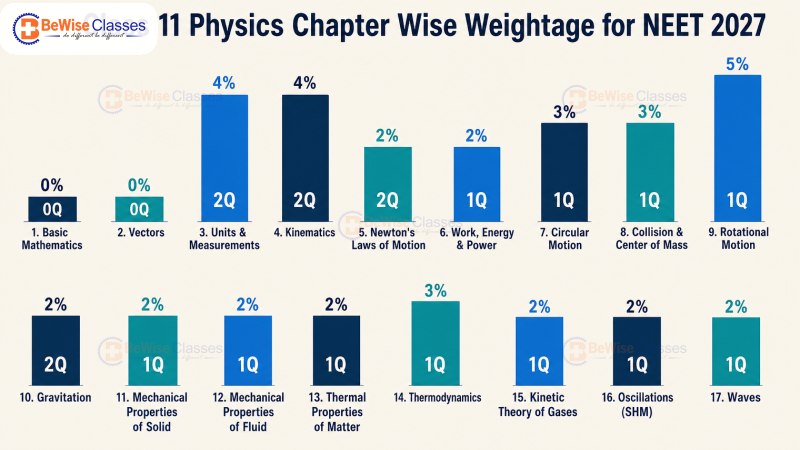
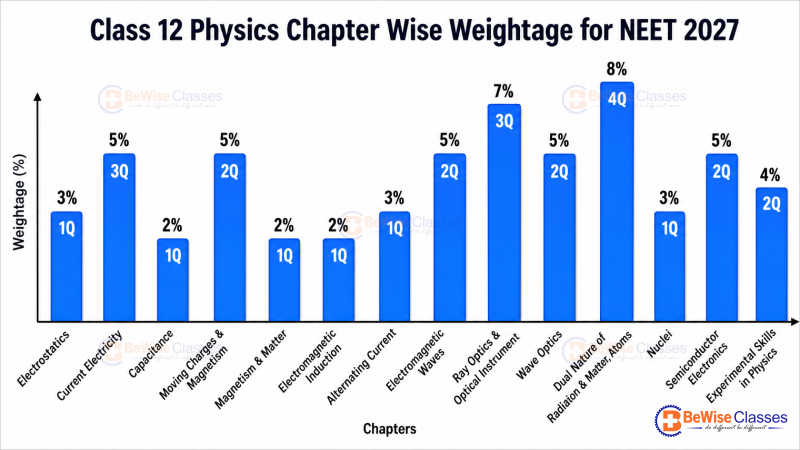

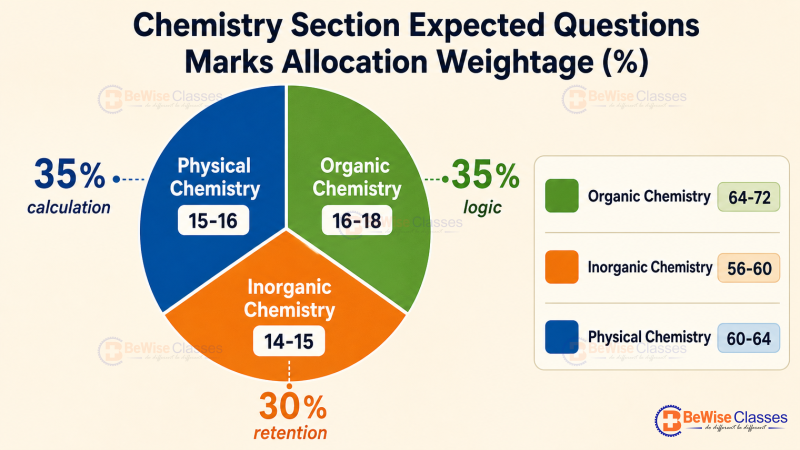
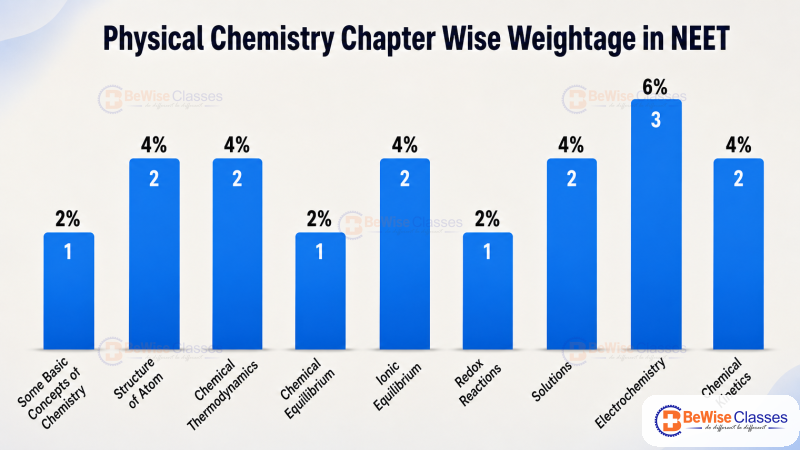
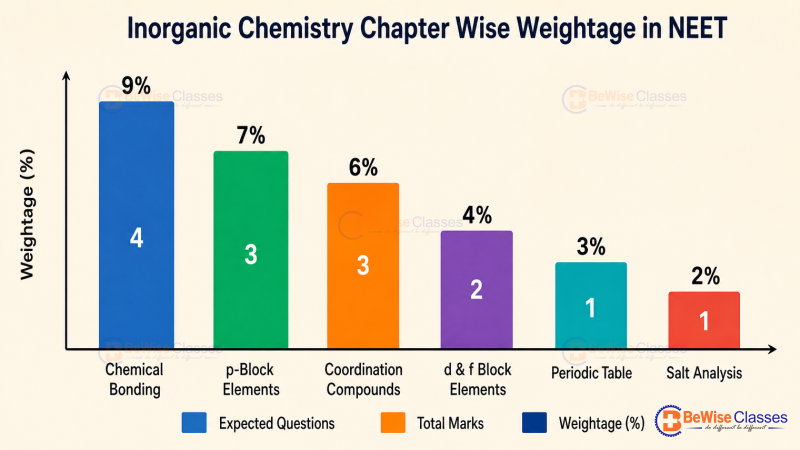
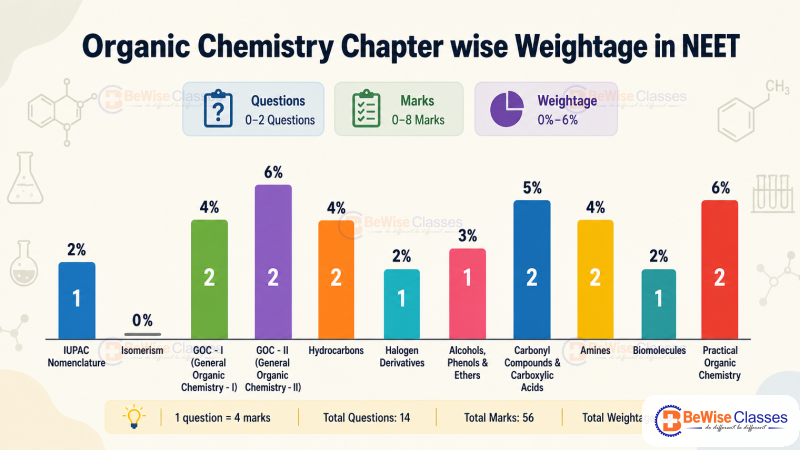


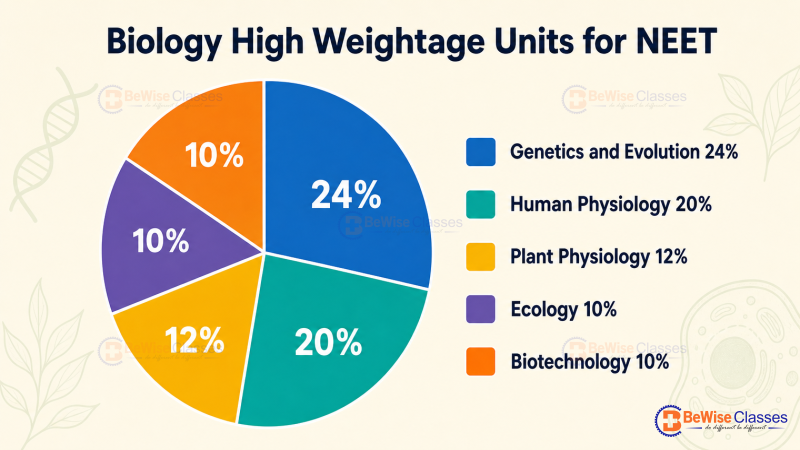
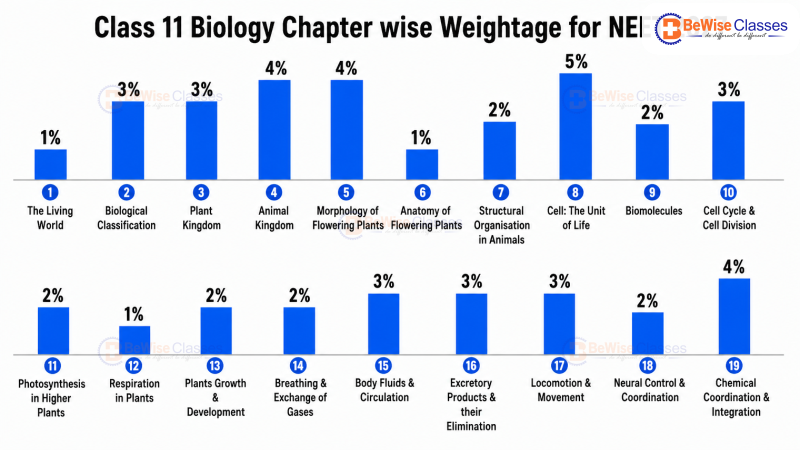
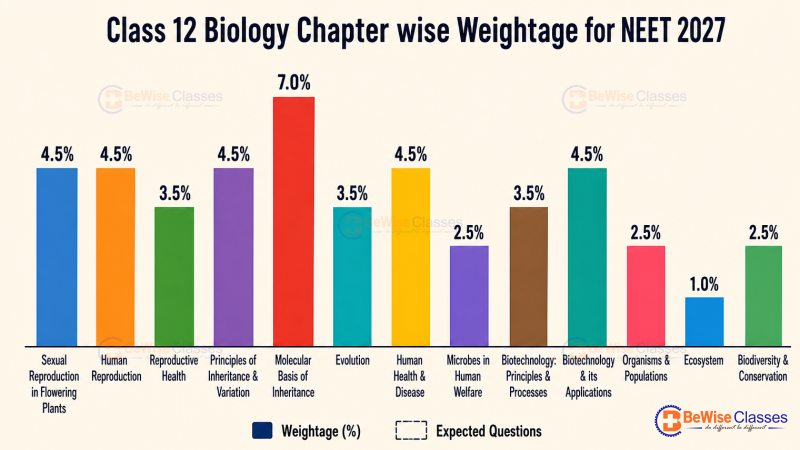


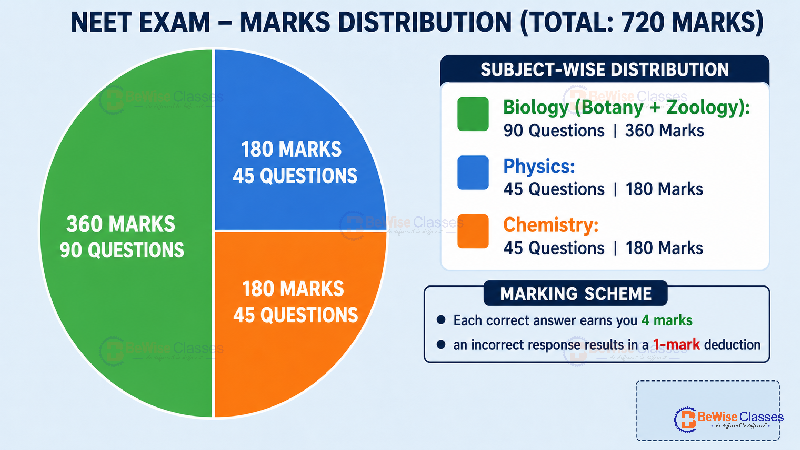
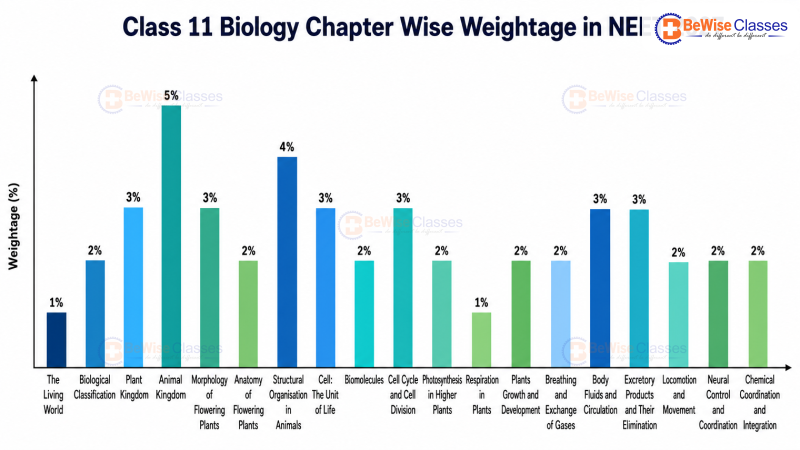
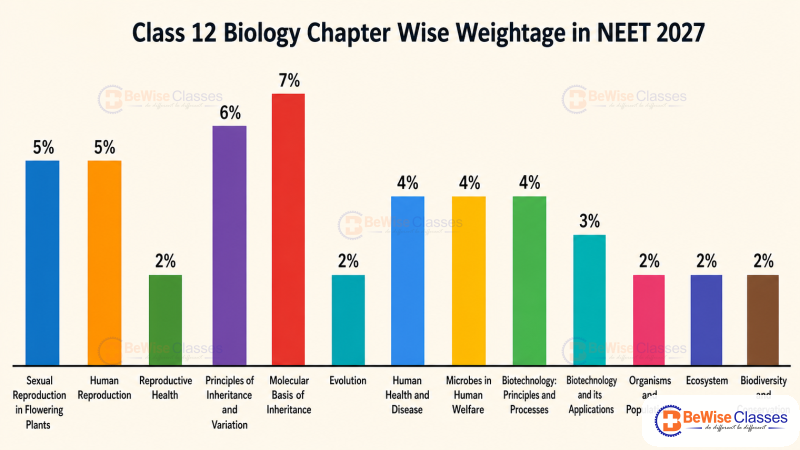
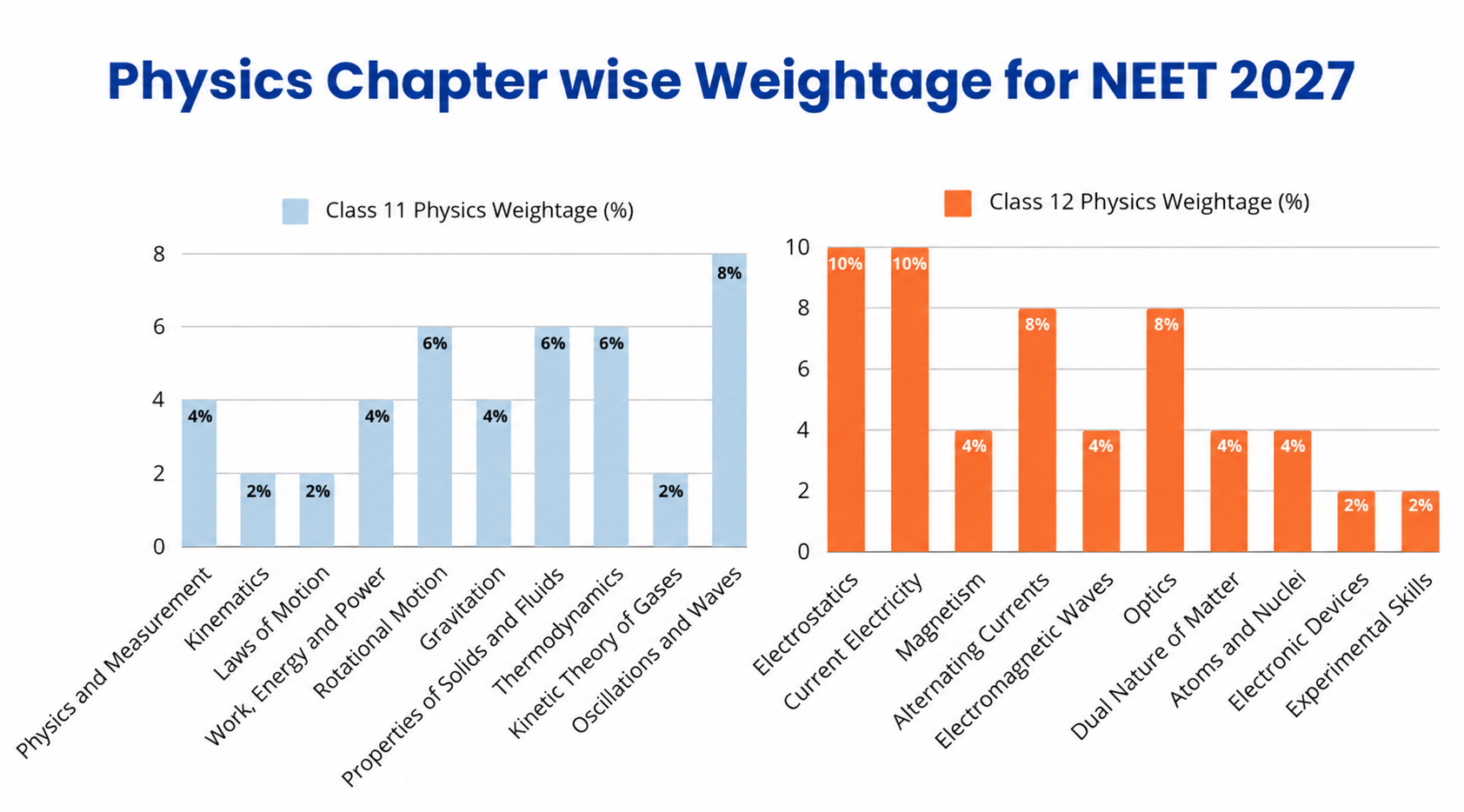
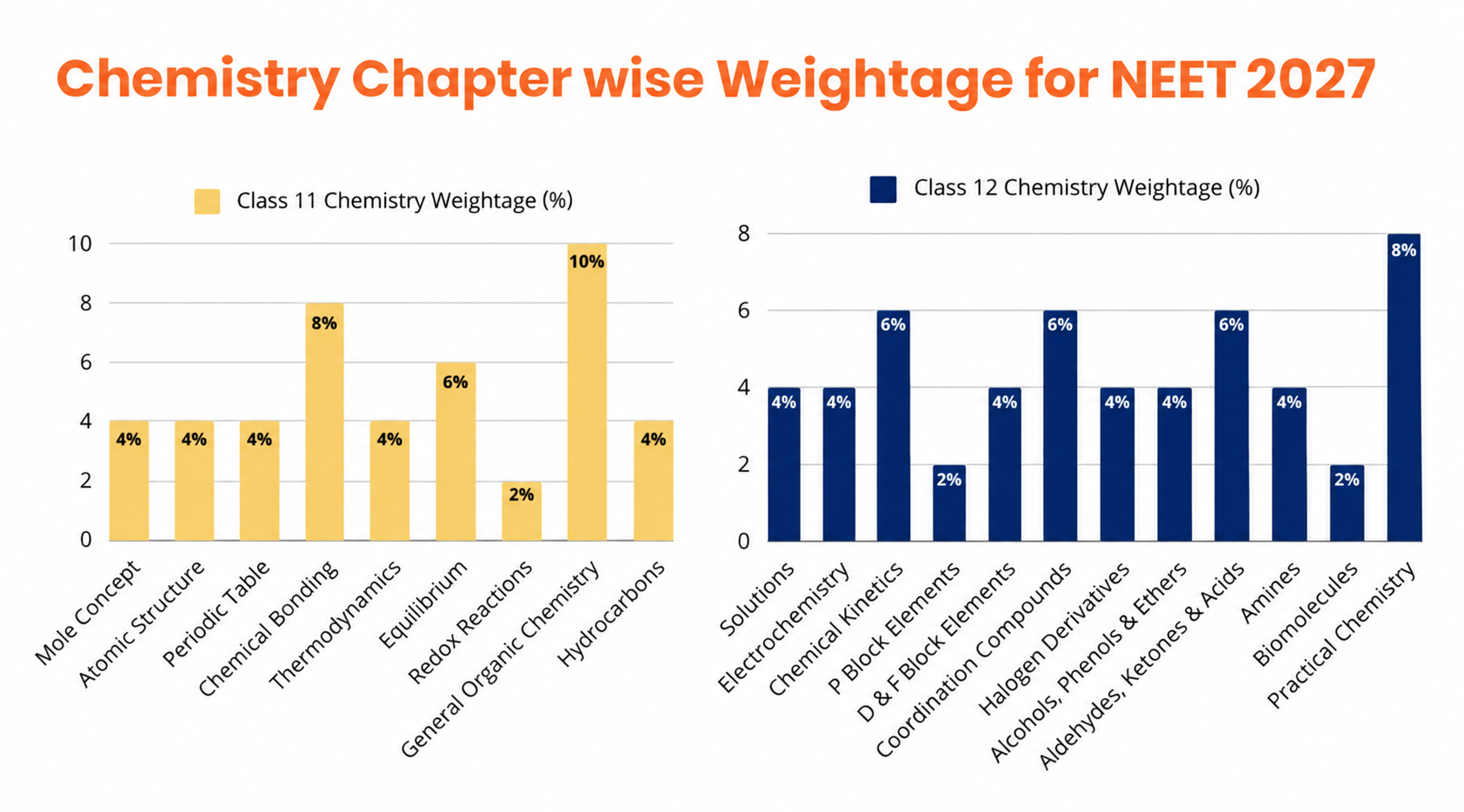


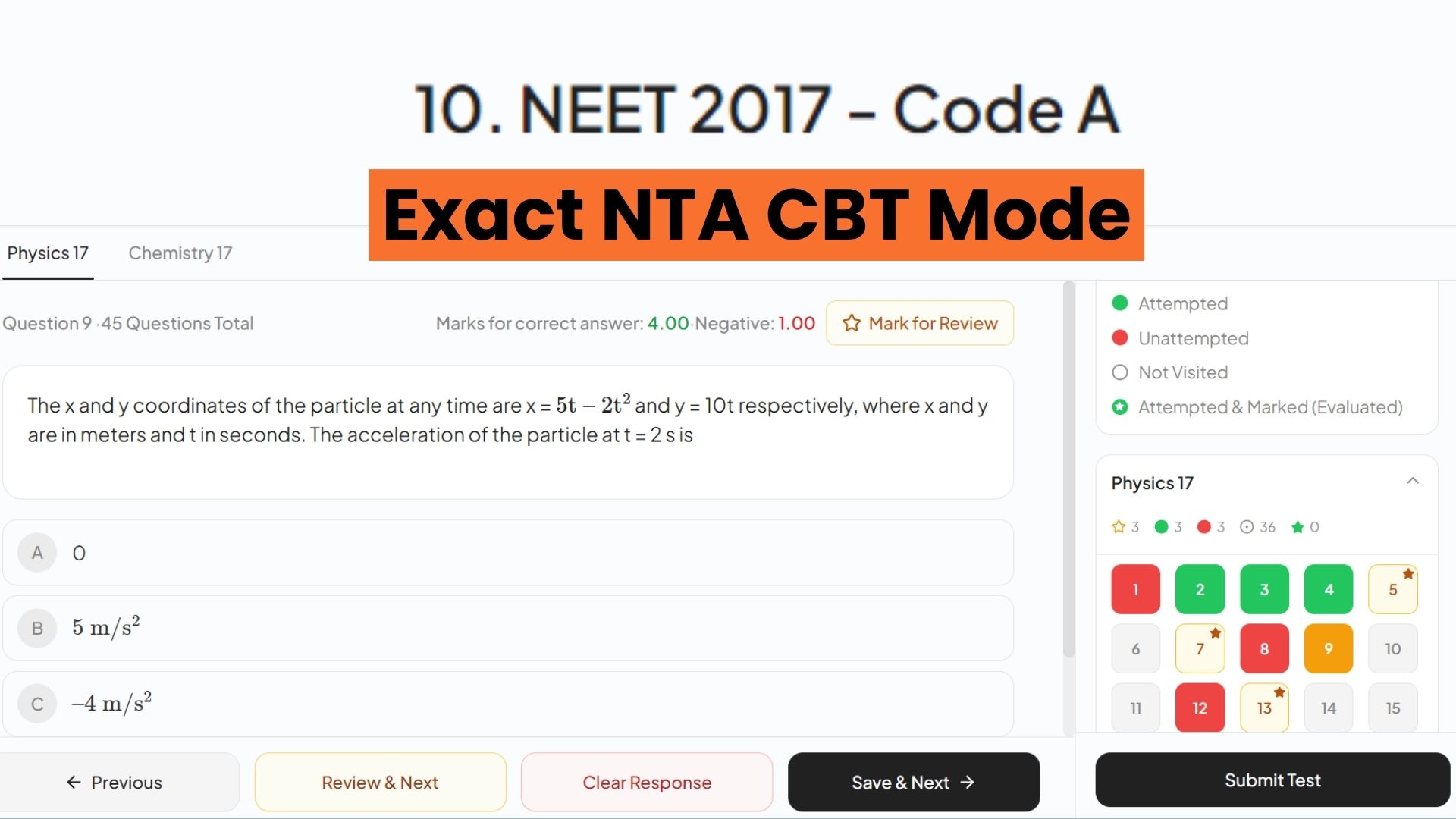
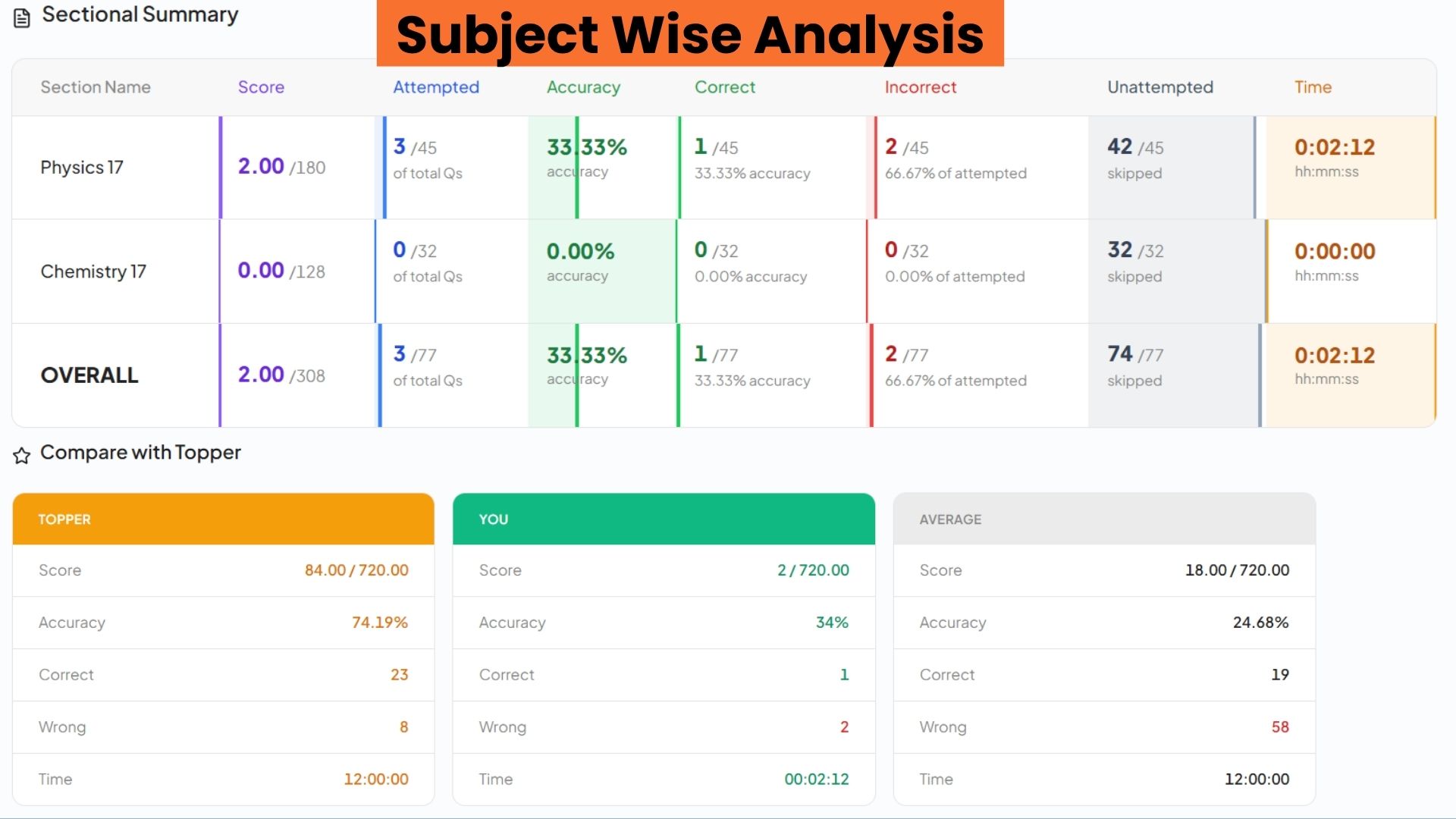
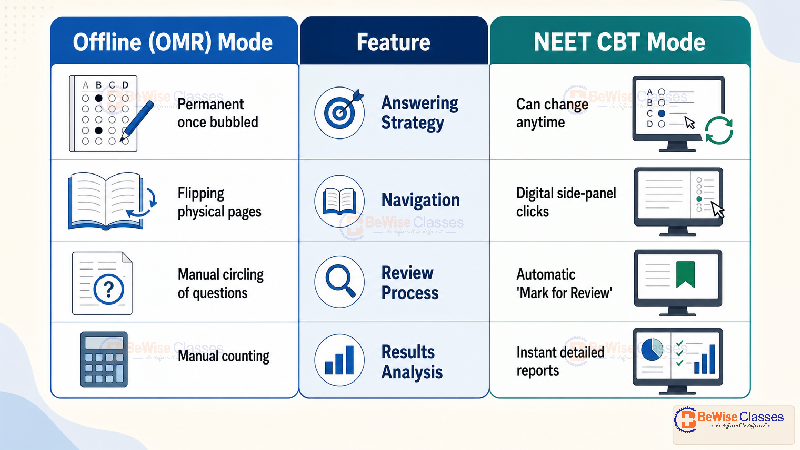





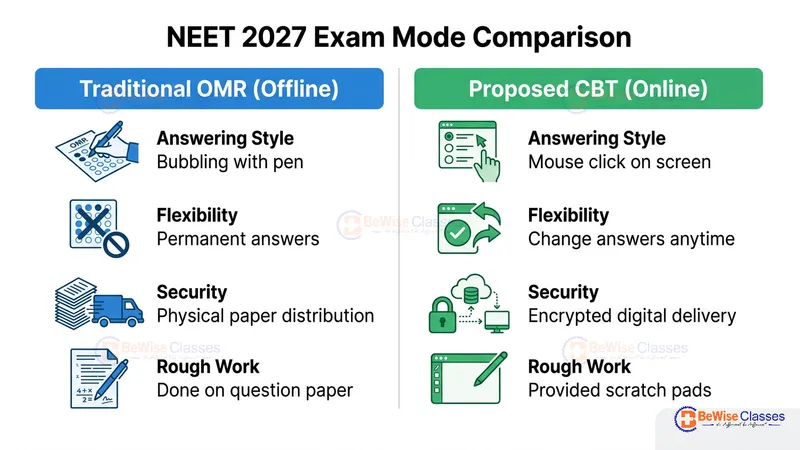

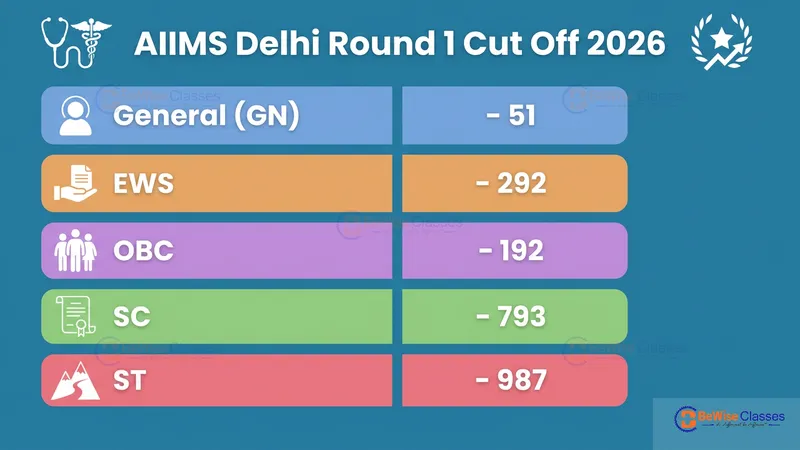


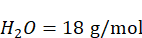
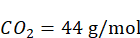
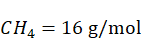












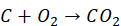


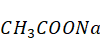





 .
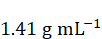
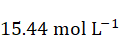


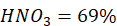








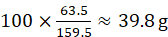




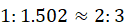

















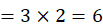
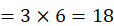



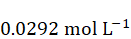

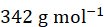


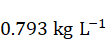

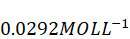



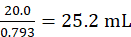


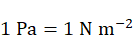
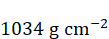
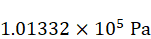








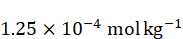
















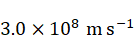






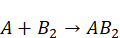



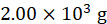
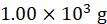
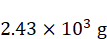


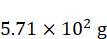
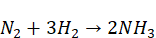
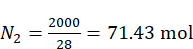
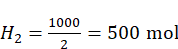






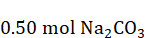
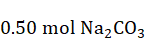








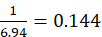


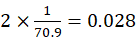





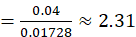


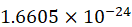

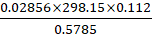












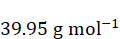
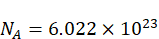

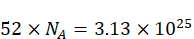

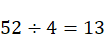


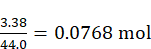
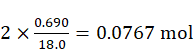


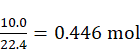
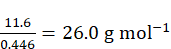
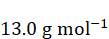

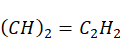









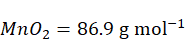
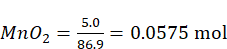







 NCERT Solutions
 Neet 2025
 Top Medical Colleges in India
 Neet Results & Answer Key
 NEET Previous Year Papers
 NEET Mock Test
 Strategy NEET Motivation
 NEET Application Form & Registration
 NEET Exam Update & News